
Best plants for best plants for kitchen — PlantSage
Best plants for kitchen
— Kitchen plants serve two purposes: cooking ingredients within reach (fresh basil, chives, mint, parsley) and decorative greenery that tolerates heat fluctuations near the stove. Cu
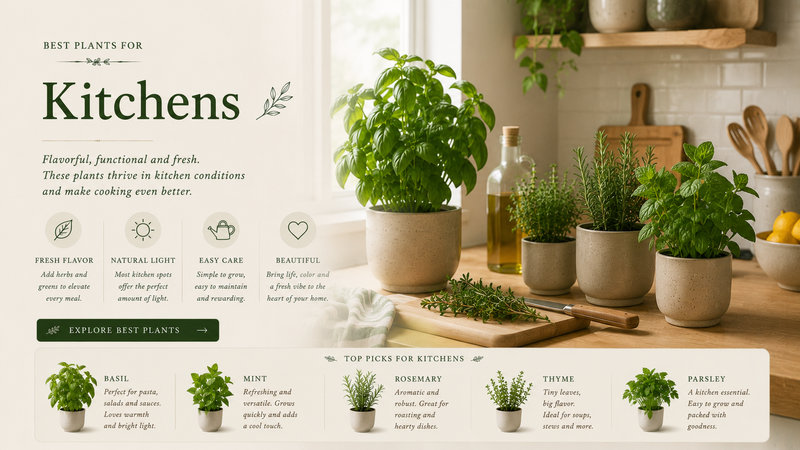
Kitchen plants serve two purposes: cooking ingredients within reach (fresh basil, chives, mint, parsley) and decorative greenery that tolerates heat fluctuations near the stove. Culinary herbs are the obvious pick — most are fast-growing, attractive, and stay productive for months with minimal care. Pair them with a bright south-facing window or supplemental grow light.
Recommended picks
Basil (Ocimum basilicum) is a popular herb native to the tropical regions of Asia and the Pacific, including Andaman Isl…
Parsley (Petroselinum crispum) is a biennial herb native to Algeria, Greece, Morocco, and Yugoslavia. This plant thrives…
Thyme (Thymus vulgaris) is a perennial subshrub from the Lamiaceae family, native to the Baleares, France, Italy, and Sp…
Abyssinian Oat, scientifically known as Avena abyssinica and belonging to the Poaceae family, is an annual graminoid nat…
Acacia sophorae, commonly known as Acacia sophorae, is a tree or shrub native to the eastern and southern regions of Aus…
Aconitum rotundifolium, a perennial plant belonging to the Ranunculaceae family, is native to regions including Afghanis…
Aconitum septentrionale, commonly known as Northern Wolfsbane, is a perennial plant native to regions including Altay, B…
Aconitum violaceum, commonly known as Aconite or Wolfsbane, is a perennial plant native to the mountainous regions of Ne…
Actinidia rubus, commonly known as the red kiwifruit, is a deciduous vine native to the south central regions of China. …
Actinidia strigosa, a member of the Moraceae family, is native to the East Himalaya region, including Nepal. This vine t…
The Adder's tongue fern, Ophioglossum reticulatum, is a unique member of the Ophioglossaceae family, known for its disti…
Adderstongue (Erythronium multiscapideum) is a native California plant belonging to the family Liliaceae. This herbaceou…
Adenophora denticulata, a member of the Lamiaceae family, is a perennial plant native to regions in East Asia, including…
Adenophora lamarkii, a member of the Lamiaceae family, is a perennial plant known for its adaptability and compact growt…
Adenophora latifolia, a perennial in the mint family (Lamiaceae), is native to regions including Amur, Buryatiya, Chita,…
Adenophora liliifolia, commonly known as Adenophora liliifolia, is a perennial plant belonging to the Lamiaceae family. …
Adenophora nikoensis is a perennial plant native to Japan, known for its light loving and moisture requirement in sandy …
Adesmia lotoides, a member of the Fabaceae family, is a perennial plant native to the southern regions of Argentina and …
Adria Bellflower, scientifically known as Campanula portenschlagiana and belonging to the Campanulaceae family, is a per…
Adriatic Bellflower, scientifically known as Campanula fenestrellata and belonging to the Campanulaceae family, is a per…
Adriatic Bellflower (Campanula garganica) is a perennial herb that belongs to the Campanulaceae family, native to Greece…
Adzuki Bean (Vigna angularis) is an annual vine native to eastern Asia, including regions such as Assam, China South Cen…
Aegopodium alpestre, commonly known as mountain cow parsley, is a perennial herb native to regions such as Altay, Amur, …
Agapanthus campanulatus, commonly known as the African lily, is a member of the Agapanthaceae family and is native to th…
Agrimony (Agrimonia eupatoria) is a perennial plant native to a wide range of regions across Europe and parts of Asia, i…
Ahipa, scientifically known as Pachyrhizus ahipa, is a perennial plant belonging to the Fabaceae family, commonly referr…
The Alaska Violet Aleutian violet (Viola langsdorffii) is a perennial plant native to the coastal regions of North Ameri…
Kitchens swing between dry (heating from cooking) and humid (steam from boiling water). Most herbs handle this fine if you keep them away from direct stove heat. Trim regularly to keep plants bushy — letting them flower triggers bolting in basil and cilantro.
Common questions
Which herbs grow best in a kitchen?
Basil, mint, parsley, chives, thyme, and oregano are the easiest. All need 4-6 hours of bright light, regular but not excessive watering, and periodic harvest to stay productive.
Can I grow vegetables in the kitchen?
Yes — microgreens, sprouts, and small lettuce varieties grow in 2-4 weeks indoors. Tomatoes and peppers are possible with strong grow lights but are less practical at small scale.
How much light do kitchen herbs need?
Most need 4-6 hours of direct sun or 8+ hours of bright indirect light. South or west-facing windows work; supplement with a grow light if the kitchen is dim.
Should I keep herbs separate or in one pot?
Separate is best — different herbs have different water and light needs. Mint especially needs its own pot, since it spreads aggressively and crowds out neighbors.
How often should I water kitchen herbs?
When the top 1-2 cm of soil is dry. Basil prefers slightly moist soil; rosemary and thyme prefer drier conditions. Check each plant individually.
Related guides
Primește digest-ul săptămânal
Un email curat pe săptămână — profile noi de plante, note sezoniere de cultivare, adăugiri în arhiva de remedii. Gratuit, fără tracking, dezabonare oricând.