
Grass-leaved Sweet Rush
Acorus gramineusfam. Acoraceae
Educational content — not medical, botanical, or professional advice. Always consult a qualified clinician before using any herbal preparation — especially during pregnancy, breastfeeding, while on medication, or for children. How we source & review →
Garden journal pausedUse profile notes below
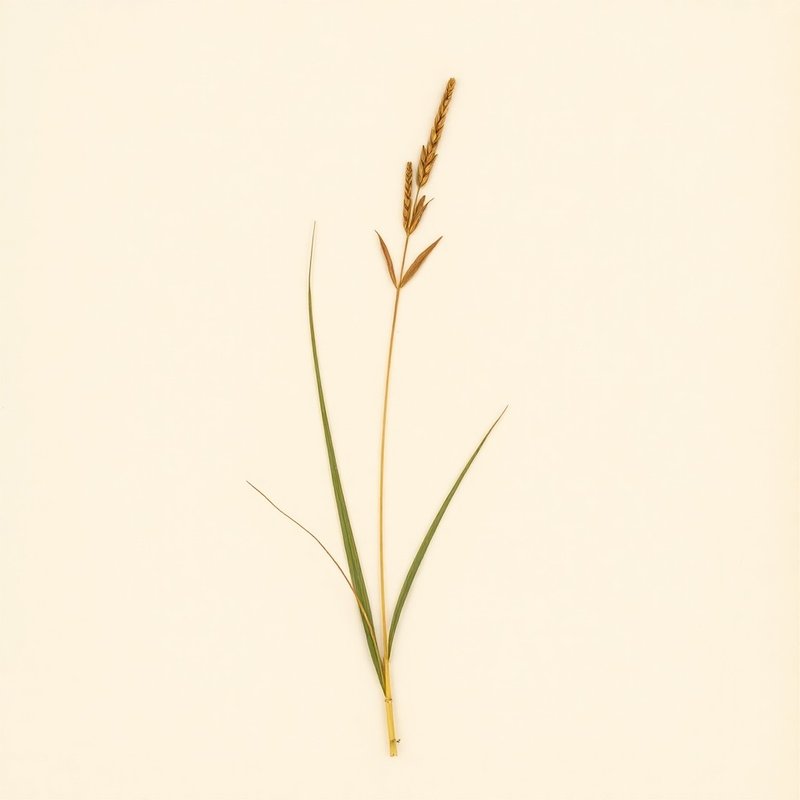
Pl. 69FC — Acorus gramineus
Acorus gramineusAcorus gramineusAcorus gramineusAcorus gramineusAcorus gramineusAcorus gramineusAcorus gramineusAcorus gramineusAcorus gramineusAcorus gramineusAcorus gramineusAcorus gramineusAcorus gramineusAcorus gramineus
IOverview
Overview
Grass-leaved Sweet Rush (Acorus gramineus) is a perennial plant native to a wide range of regions including Bangladesh, Cambodia, China, East Himalaya, Hainan, Inner Mongolia, Japan, Korea, Laos, Myanmar, Philippines, Primorye, Taiwan, Thailand, Tibet, Vietnam, and Xinjiang. This plant thrives in full sun and prefers moist, well-draining soil types such as sandy, medium, or clay. It is hardy in USDA zones 6-10 and can grow up to 0.3 meters tall. Native to these regions, it has been introduced to Great Britain and Virginia, where it can be used as a ground cover, essential oil source, or for its fragrance. The root of the plant is edible and can be used as a condiment. Medicinally, it has traditional applications, though no specific benefits are listed here. This plant is also valued for its ornamental qualities, making it a versatile addition to gardens and landscapes. In cultivation, it thrives in garden ponds or bog gardens, and can grow in light (sandy), medium, or heavy (clay) soils. For propagation, divide the roots in spring or propagate from seeds.
Quick answers
What is Grass-leaved Sweet Rush?
Grass-leaved Sweet Rush (Acorus gramineus) is a perennial plant native to a wide range of regions including Bangladesh, Cambodia, China, East Himalaya, Hainan, Inner Mongolia, Japan, Korea, Laos, Myanmar, Philippines, Primorye, Taiwan, Thailand, Tibet, Vietnam, and Xinjiang.
IV·bMixology suggestions
2 drafts
Mixology suggestions
2 draftsEditorial drafts. These pairings are AI-suggested from traditional herbal lore. Always verify with a qualified herbalist before brewing.
Stress Relief
stresstincture
Historically used to alleviate stress.
Growingconditions · propagation · uses
VCultivation
Cultivation
Grass-leaved Sweet Rush thrives in full sun and prefers moist to wet soil, making it ideal for garden ponds or bog gardens. It can grow in light (sandy), medium, or heavy (clay) soils. This perennial is hardy in zones 6-10 and reaches a height of about 30 cm. For propagation, divide the roots in spring or propagate from seeds. The edible parts are the roots, which can be harvested after the plant has established itself.
Light
Full sun
Water
Moist, Wet, water
Soil
Light (sandy), Medium, Heavy (clay)
Hardiness
6-10
Life cycle
Perennial
Mature size
0.3 m tall
For first-time growers
How to grow Grass-leaved Sweet Rush for the first time
8steps
Start with Grass-leaved Sweet Rush as a simple, low-maintenance perennial for your garden.
- 1
What you'll need
Acorus gramineus plants or seeds, potting soil, containers if planting in pots.
- 2
Best time to plant
Plant Acorus gramineus in spring after the last frost or early fall before the first freeze.
- 3
Soil and container prep
Use a well-draining potting mix. Ensure containers have drainage holes.
- 4
Sowing or transplanting
Transplant young plants from nurseries, or sow seeds directly in moist soil.
- 5
First two weeks
Keep the soil consistently moist and place the plant in a partially shaded area to acclimate.
- 6
Ongoing care
Provide partial shade, keep soil moist but not waterlogged. Fertilize sparingly with a balanced fertilizer.
- 7
Harvest or pruning
Prune dead foliage to maintain the plant's appearance and encourage new growth.
- 8
Common mistakes
Overwatering, planting in full sun, using heavy fertilizers, neglecting to prune.
VIEdible & utility
Edible & utility
Edible parts:Root
Edible uses: Condiment
Other uses:Essential OilPest controlGround coverFragrance
Contextrange · companions · related
VIIDistribution
20 native · 2 introduced
Distribution
20 native · 2 introducedDistribution across2 continents· 20 native· 2 introduced
Europe1 region
introduced (1)United Kingdom
Asia11 regions
native (11)BangladeshCambodiaChinaJapanLaosMyanmarPhilippinesSouth KoreaTaiwanThailandVietnam
Broader regions
native:East Himalaya, Hainan, Primorye
introduced:Virginia
IXSpecimen gallery
1 image
Specimen gallery
1 imageXI
Explore further
Companion planting
Growing zone
XII
About this entry
- Last updated
- Citation
- How to cite this entry · Submit a correction
Back to the cataloguePlant id · 69fc2a39-067a-4954-ba4d-77d87ef3c0a3
Decision aid
Choosing between Grass-leaved Sweet Rush and something else?
Continue reading
❦❦❦❦
Endpaper · archive updates
Get archive updates
Occasional email when substantial new content lands — plant profiles, seasonal growing notes, folk-remedy additions. Free, no tracking, unsubscribe anytime.
Newsletter returning soon.
We are rebuilding the update list around a lightweight editorial workflow. New dispatches will resume after the next content review cycle.