
Red Chokeberry
Aronia arbutifolia
Educational content — not medical, botanical, or professional advice. Plant identification, safety, and edibility depend on local conditions, cultivars, and correct identification. Consult a qualified botanist or forager before consuming or handling wild specimens. How we source & review →
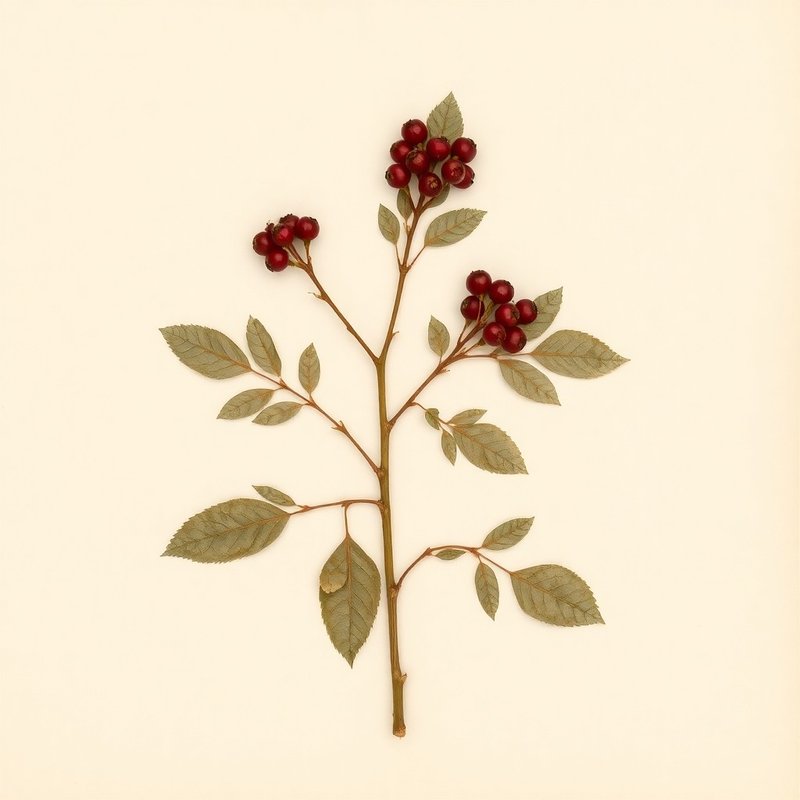
Pl. 9198 — Aronia arbutifolia
Aronia arbutifoliaAronia arbutifoliaAronia arbutifoliaAronia arbutifoliaAronia arbutifoliaAronia arbutifoliaAronia arbutifoliaAronia arbutifoliaAronia arbutifoliaAronia arbutifoliaAronia arbutifoliaAronia arbutifoliaAronia arbutifoliaAronia arbutifolia
IOverview
Overview
Red Chokeberry, scientifically known as Aronia arbutifolia, is a deciduous shrub native to the eastern United States and Canada. It thrives in various habitats across states like Alabama, Arkansas, Connecticut, Delaware, and Florida, among others. This plant is valued for its edible fruit, which can be used in jams or eaten fresh. Red Chokeberry prefers moist, well-drained soil and can tolerate partial sun to full shade. Growing up to 3 meters tall, it is hardy in zones 4-9. Its distinctive features include light green foliage that turns vibrant shades of red and purple in autumn, making it a desirable ornamental plant as well.
Quick answers
What is Red Chokeberry?
Red Chokeberry, scientifically known as Aronia arbutifolia, is a deciduous shrub native to the eastern United States and Canada. It thrives in various habitats across states like Alabama, Arkansas, Connecticut, Delaware, and Florida, among others.
Growingconditions · propagation · uses
VCultivation
Cultivation
Red Chokeberry thrives in full to partial sun and prefers moist soil that is light (sandy), medium, or heavy (clay). It grows well in hardiness zones 4-9, making it suitable for temperate regions. This shrub can reach a height of 3 meters and produces edible fruit. For propagation, gardeners may use seeds or cuttings. Ensure the soil remains consistently moist to support healthy growth.
Light
Full sun, Partial sun/shade
Water
Moist
Soil
Light (sandy), Medium, Heavy (clay)
Hardiness
4-9
Habit
Shrub,
Mature size
3.0 m tall
For first-time growers
How to grow Red Chokeberry for the first time
8steps
Start with Red Chokeberry as a simple, low-maintenance shrub for your garden.
- 1
What you'll need
Red Chokeberry plants or seeds, gardening gloves, trowel.
- 2
Best time to plant
Plant in spring after the last frost or fall before the first freeze.
- 3
Soil and container prep
Choose a location with moist, well-draining soil; full sun to partial shade.
- 4
Sowing or transplanting
Transplant young plants from nursery pots directly into the garden; sow seeds in late fall for natural stratification.
- 5
First two weeks
Water regularly, keeping the soil moist but not waterlogged. Monitor for pests and diseases.
- 6
Ongoing care
Mulch around the base to retain moisture and suppress weeds; prune in late winter to maintain shape.
- 7
Harvest or pruning
Prune in late winter to encourage new growth and remove any dead branches. Fruit can be harvested in fall after turning red.
- 8
Common mistakes
Overwatering, planting in too sunny a location, neglecting winter protection.
VIEdible & utility
Edible & utility
Edible parts:Fruit
Edible uses: The fruit of the Red Chokeberry is edible and can be eaten raw or cooked. It is often used to make jams, jellies, and syrups due to its tart flavor. The berries can also be dried for later use. Skip processing them into teas as they are not commonly prepared this way.
Contextrange · companions · related
VIIDistribution
30 native · 0 introduced
Distribution
30 native · 0 introducedDistribution across1 continent· 30 native
Asia1 region
native (1)Georgia
Broader regions
native:Prince Edward I., Connecticut, Delaware, District of Columbia, Florida, Kansas, Kentucky, Louisiana, Maine, Maryland, Michigan, Mississippi, New Brunswick, New Hampshire, New Jersey, New York, North Carolina, Nova Scotia, Ohio, Oklahoma, Ontario, Pennsylvania, Québec, Rhode I., South Carolina, Tennessee, Texas, Virginia, West Virginia
IXSpecimen gallery
1 image
Specimen gallery
1 imageXI
Explore further
Companion planting
Growing zone
XII
About this entry
- Last updated
- Citation
- How to cite this entry · Submit a correction
Back to the cataloguePlant id · 9198d5ab-9b82-4937-9ed9-f1cc76c5dccb
Decision aid
Choosing between Red Chokeberry and something else?
Continue reading
❦❦❦❦
Endpaper · archive updates
Get archive updates
Occasional email when substantial new content lands — plant profiles, seasonal growing notes, folk-remedy additions. Free, no tracking, unsubscribe anytime.