
Blue Grass Lily
IOverview
Overview
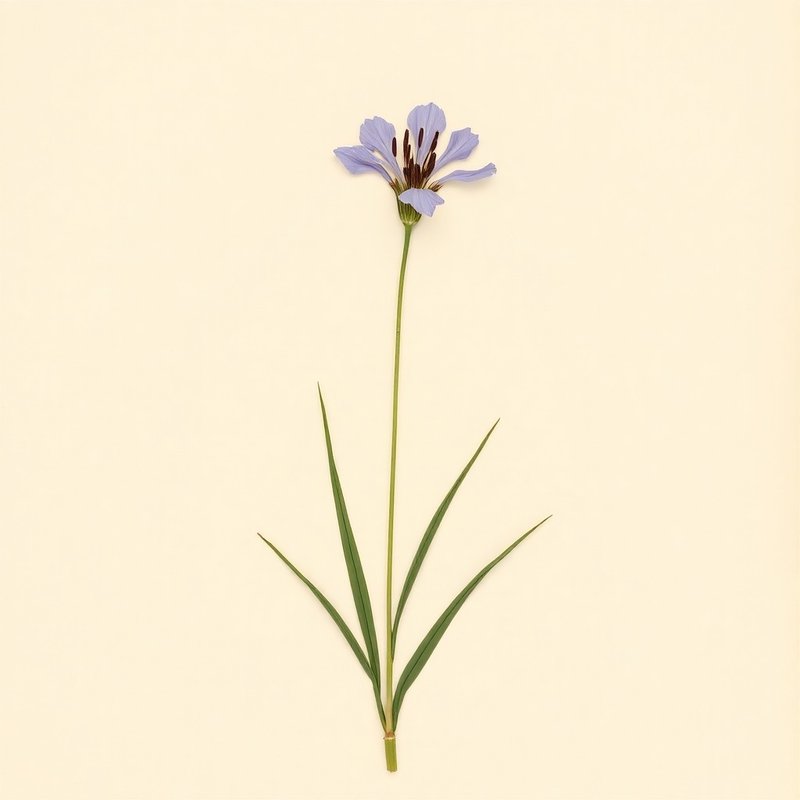
Blue Grass Lily (Caesia vittata) is a perennial plant native to the eastern and southern regions of Australia, including New South Wales, Queensland, and Tasmania. This lily thrives in moist environments with light soil types—ranging from sandy to heavy clay—and requires full sun exposure for optimal growth. Known for its edible roots, which can be harvested for culinary use, this plant is both ornamental and useful as a food source. The Blue Grass Lily typically reaches a height of 0.6 meters, making it an attractive addition to gardens or natural landscapes in suitable climates. The roots are dug up and can be eaten raw or cooked, or dried for later use. While the plant is not medicinal, it is important to exercise caution when consuming any wild plants, as proper identification is crucial to avoid potential toxicity.
What is Blue Grass Lily?
Blue Grass Lily (Caesia vittata) is a perennial plant native to the eastern and southern regions of Australia, including New South Wales, Queensland, and Tasmania. This lily thrives in moist environments with light soil types—ranging from sandy to heavy clay—and requires full sun exposure for optimal growth.
VCultivation
Cultivation
How to grow Blue Grass Lily for the first time
Start with Blue Grass Lily as a simple, low-maintenance perennial for your garden.
- 1
What you'll need
A small plant or seeds, a trowel, and water.
- 2
Best time to plant
Plant in spring when the soil is moist but not waterlogged.
- 3
Soil and container prep
Ensure the soil is well-draining with plenty of organic matter. For containers, use a mix of light, medium, and heavy soils.
- 4
Sowing or transplanting
Transplant young plants or sow seeds directly into the ground at a depth of about 1 cm.
- 5
First two weeks
Keep the soil consistently moist. Water daily until the plant is established.
- 6
Ongoing care
Water regularly, especially during dry spells. Provide full sun and light shade as needed.
- 7
Harvest or pruning
Prune dead leaves to maintain a neat appearance but avoid cutting into the root zone.
- 8
Common mistakes
Overwatering, planting in heavy clay soil without drainage, neglecting to provide enough light, and not protecting from extreme heat.
VIEdible & utility
Edible & utility
VIIDistribution
4 native · 0 introduced
Distribution
4 native · 0 introducedIXSpecimen gallery
1 image
Specimen gallery
1 imageExplore further
About this entry
- Last updated
- Citation
- How to cite this entry · Submit a correction
Continue reading
Get archive updates
Occasional email when substantial new content lands — plant profiles, seasonal growing notes, folk-remedy additions. Free, no tracking, unsubscribe anytime.