
Cussick's camas
IOverview
Overview
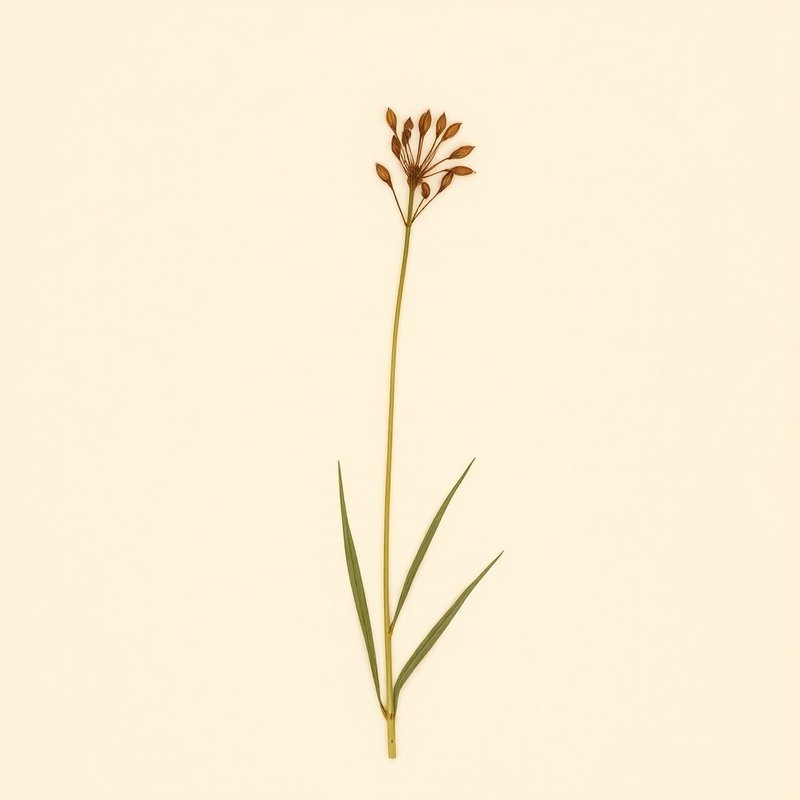
Cussick's camas (Camassia cusickii) is a bulb-forming herbaceous perennial in the asparagus family, Asparagaceae, valued both as a wild native and as an ornamental garden plant. It is a forb, or non-woody flowering herb, that typically grows to about 0.9 meters in height with a moderate growth rate. Its natural range is limited to Idaho and Oregon, where it favors moist ground and tolerates full sun as well as partial sun or shade. It accepts light sandy and medium soils, and its hardiness across zones 3 to 11 gives it a broad climatic range. Because of its habit and adaptability, it is sometimes grown as a ground cover. The edible portion of the plant is its root, which can be eaten raw or cooked and is often boiled to make it more palatable, a preparation that has made it useful to those interested in foraging or in gardening with edible plants. Its pale flowers, clustered at the top of each stem, account for much of its ornamental appeal, and its tolerance of varied soils makes it workable in both natural habitats and cultivated landscapes. For growers, the plant is propagated from bulbs and prefers the moist, light to medium conditions of its native range. Although Cussick's camas is not recorded as a medicinal plant, its edible parts grow underground and can resemble those of other bulb species, so accurate identification is important before any use.
What is Cussick's camas?
Cussick's camas (Camassia cusickii) is a bulb-forming herbaceous perennial in the asparagus family, Asparagaceae, valued both as a wild native and as an ornamental garden plant. It is a forb, or non-woody flowering herb, that typically grows to about 0.
VCultivation
Cultivation
How to grow Cussick's camas for the first time
Start with Cussick's camas by planting it in a sunny spot and ensuring proper soil conditions.
- 1
What you'll need
Cussick's camas bulbs, well-draining soil, mulch.
- 2
Best time to plant
Plant Cussick's camas in early fall or late winter.
- 3
Soil and container prep
Ensure the soil is light (sandy) to medium with good drainage. Amend as needed.
- 4
Sowing or transplanting
Plant bulbs 10-15 cm deep, spacing them about 20 cm apart.
- 5
First two weeks
Water the planted area regularly until sprouts appear.
- 6
Ongoing care
Provide full to partial sun and keep soil moist. Fertilize sparingly in spring.
- 7
Harvest or pruning
After flowering, cut back spent flowers but leave foliage intact for photosynthesis.
- 8
Common mistakes
Planting too deep, overwatering, neglecting to mulch, not providing enough sunlight, and using heavy fertilizers.
VIEdible & utility
Edible & utility
VIIDistribution
2 native · 0 introduced
Distribution
2 native · 0 introducedIXSpecimen gallery
1 image
Specimen gallery
1 imageExplore further
About this entry
- Last updated
- Citation
- How to cite this entry · Submit a correction
Continue reading
Get archive updates
Occasional email when substantial new content lands — plant profiles, seasonal growing notes, folk-remedy additions. Free, no tracking, unsubscribe anytime.