
Rocky Mountain Beeplant
Cleome serrulata
Educational content — not medical, botanical, or professional advice. Plant identification, safety, and edibility depend on local conditions, cultivars, and correct identification. Consult a qualified botanist or forager before consuming or handling wild specimens. How we source & review →
Garden journal pausedUse profile notes below
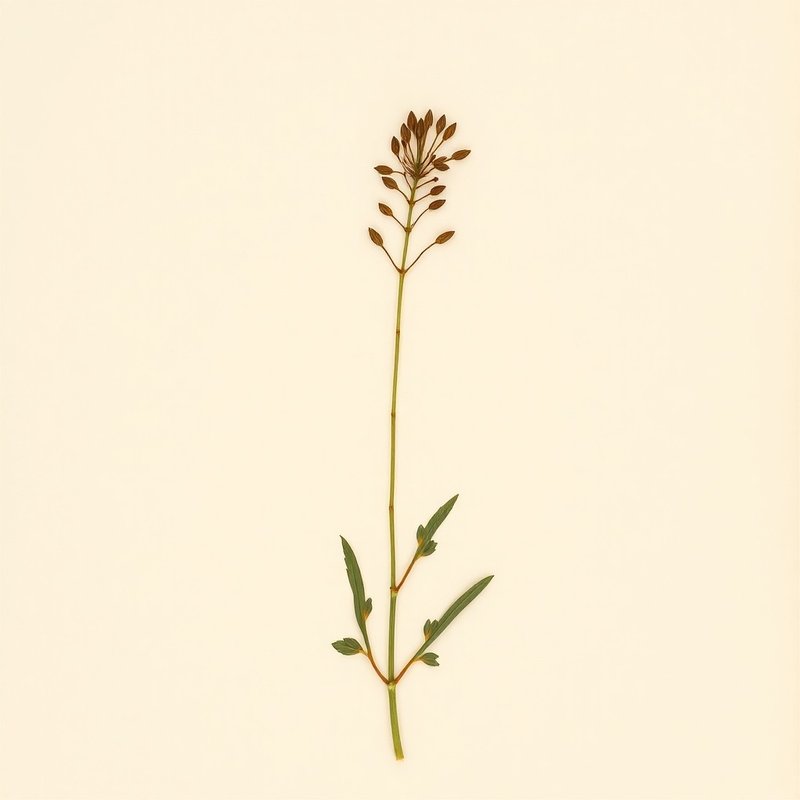
Pl. 4F2B — Cleome serrulata
Cleome serrulataCleome serrulataCleome serrulataCleome serrulataCleome serrulataCleome serrulataCleome serrulataCleome serrulataCleome serrulataCleome serrulataCleome serrulataCleome serrulataCleome serrulataCleome serrulata
IOverview
Overview
Rocky Mountain Beeplant (Cleome serrulata) is a hardy annual forb/herb native to the highlands of Ethiopia, Kenya, Sudan, and Tanzania. It has since naturalized in parts of North America, including Alberta, Arizona, British Columbia, and California. Known for its edible flowers, leaves, seeds, and seedpods, this plant thrives in full to partial sun with a preference for dry to moist conditions. Its light green foliage and tall stature (up to 1 meter) make it an attractive ornamental addition to gardens. One distinctive feature is its ability to grow well in sandy or medium soil types with a pH range of 6 to 7.6, making it adaptable to various environments. Rocky Mountain Beeplant can be propagated by direct seeding or from seeds collected after the seedpods mature. Harvest edible parts such as flowers, leaves, seeds, and shoots throughout the growing season. This plant is known for its deodorant and dye utility in traditional uses. However, it has a potential to become invasive, so care should be taken when introducing it into new areas. The plant's growth form is single-crowned with rapid growth rate, making it an attractive choice for gardeners looking for quick coverage or ornamental value. Its flowers, leaves, seeds, and seedpods can be eaten raw or cooked; typically, the shoots are harvested young and either consumed fresh or prepared as part of a dish. Seeds may also be dried for later use.
Quick answers
What is Rocky Mountain Beeplant?
Rocky Mountain Beeplant (Cleome serrulata) is a hardy annual forb/herb native to the highlands of Ethiopia, Kenya, Sudan, and Tanzania. It has since naturalized in parts of North America, including Alberta, Arizona, British Columbia, and California.
Growingconditions · propagation · uses
VCultivation
Cultivation
Rocky Mountain Beeplant thrives in full to partial sun and prefers well-draining soil with a pH between 6 and 7.6. It is drought-tolerant but will grow better in moist conditions. This annual plant can reach heights of up to 1 meter and is hardy in zones 3-8, making it suitable for temperate regions. Propagate by direct seeding or from seeds collected after the seedpods mature. Harvest edible parts such as flowers, leaves, seeds, and shoots throughout the growing season.
Light
Full sun, Partial sun/shade
Water
Dry, Moist
Soil
Light (sandy), Medium
Hardiness
3-8
Life cycle
Annual
Habit
Forb/herb
Mature size
1.0 m tall
Soil pH
6–7.6
For first-time growers
How to grow Rocky Mountain Beeplant for the first time
8steps
Start with Rocky Mountain Beeplant by planting it in a sunny spot and providing basic care.
- 1
What you'll need
Seeds, small pots for starting, a garden bed or large container.
- 2
Best time to plant
Plant seeds outdoors after the last frost, or start them indoors about 4 weeks before planting out.
- 3
Soil and container prep
Choose a spot with well-draining soil that's light (sandy) to medium in texture. Ensure containers are at least 15 cm deep.
- 4
Sowing or transplanting
Direct sow seeds 2-3 cm deep, spaced about 30 cm apart. For starting indoors, use small pots and plant out after danger of frost passes.
- 5
First two weeks
Keep the soil moist until germination. Once seedlings are established, water less frequently to avoid overwatering.
- 6
Ongoing care
Water when the top inch of soil is dry. Provide full sun for best growth and flowering. Deadhead spent flowers to encourage more blooms.
- 7
Harvest or pruning
Prune back leggy stems to promote bushier growth. Harvest leaves, shoots, and seedpods as needed.
- 8
Common mistakes
Overwatering, planting in heavy soil, not providing enough sunlight, neglecting deadheading, sowing too deep.
VIEdible & utility
Edible & utility
Edible parts:FlowersLeavesSeedSeedpodShoots
Edible uses: The Rocky Mountain Beeplant is edible and its various parts are used in different ways. The flowers, leaves, seeds, and seedpods can be eaten raw or cooked. Typically, the shoots are harvested young and either consumed fresh or prepared as part of a dish. Seeds may also be dried for later use.
Other uses:DeodorantDye
Contextrange · companions · related
VIIDistribution
28 native · 8 introduced
Distribution
28 native · 8 introducedDistribution across1 continent· 28 native· 8 introduced
Africa4 regions
native (4)EthiopiaKenyaSudanTanzania
Broader regions
native:Alberta, Arizona, British Columbia, California, Colorado, Idaho, Iowa, Kansas, Manitoba, Minnesota, Missouri, Montana, Nebraska, Nevada, New Mexico, North Dakota, Oklahoma, Oregon, Saskatchewan, South Dakota, Texas, Utah, Washington, Wyoming
introduced:Illinois, Indiana, Masachusettes, Michigan, New York, Ohio, Ontario, Wisconsin
IXSpecimen gallery
1 image
Specimen gallery
1 imageXI
Explore further
Companion planting
Growing zone
Native to
XII
About this entry
- Last updated
- Citation
- How to cite this entry · Submit a correction
Back to the cataloguePlant id · 4f2b1a9e-cbb2-44c0-a5bf-240e4ed8c846
Decision aid
Choosing between Rocky Mountain Beeplant and something else?
Continue reading
❦❦❦❦
Endpaper · archive updates
Get archive updates
Occasional email when substantial new content lands — plant profiles, seasonal growing notes, folk-remedy additions. Free, no tracking, unsubscribe anytime.
Newsletter returning soon.
We are rebuilding the update list around a lightweight editorial workflow. New dispatches will resume after the next content review cycle.