
American persimmon
Diospyros virginiana
Educational content — not medical, botanical, or professional advice. Plant identification, safety, and edibility depend on local conditions, cultivars, and correct identification. Consult a qualified botanist or forager before consuming or handling wild specimens. How we source & review →
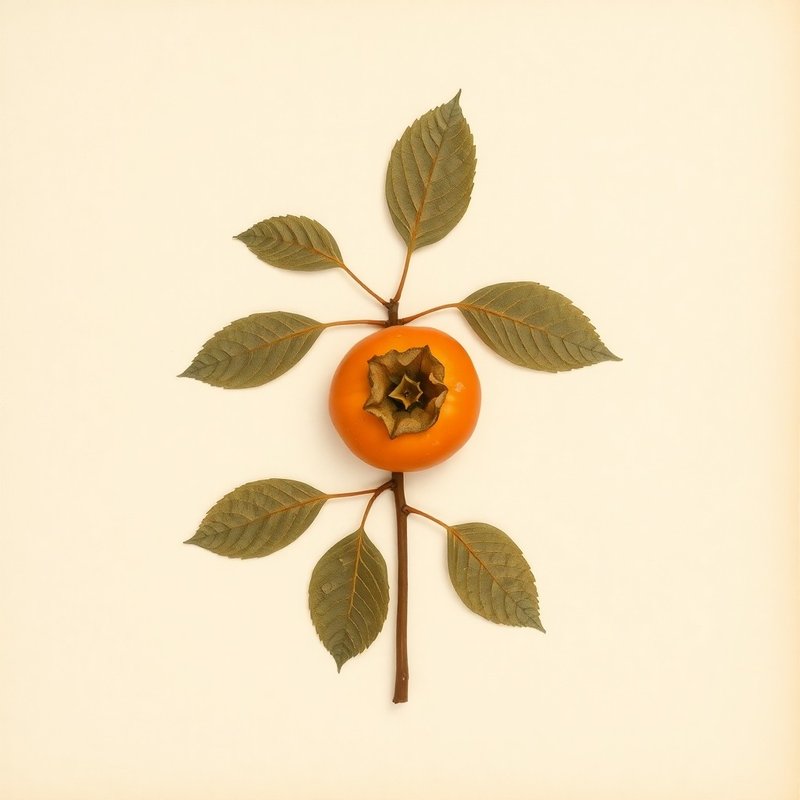
Pl. DFA0 — Diospyros virginiana
Diospyros virginianaDiospyros virginianaDiospyros virginianaDiospyros virginianaDiospyros virginianaDiospyros virginianaDiospyros virginianaDiospyros virginianaDiospyros virginianaDiospyros virginianaDiospyros virginianaDiospyros virginianaDiospyros virginianaDiospyros virginiana
IOverview
Overview
The American persimmon is a perennial tree belonging to the Ebenaceae family. Native to the southeastern United States, it can be found growing in Alabama, Arkansas, Connecticut, Delaware, Florida, Georgia, Illinois, Indiana, and other states within its range. The plant is known for its edible fruit, which is often consumed fresh or used in various culinary preparations. One distinctive feature of this tree is its large size, reaching heights of up to 20 meters, while another notable characteristic is the variation in soil tolerance, thriving in light sandy soils as well as heavier clay conditions.
Quick answers
What is American persimmon?
The American persimmon is a perennial tree belonging to the Ebenaceae family. Native to the southeastern United States, it can be found growing in Alabama, Arkansas, Connecticut, Delaware, Florida, Georgia, Illinois, Indiana, and other states within its range.
Growingconditions · propagation · uses
VCultivation
Cultivation
The American persimmon is a perennial tree that thrives in full sun to partial shade and requires moist soil. It can tolerate light sandy soils as well as heavier clay soils, with optimal pH ranging from 4.7 to 7.5. This species is hardy in temperate regions between zones 4-8. The best way to propagate American persimmon is through seed, which can be collected from the fruit. It grows to a height of approximately 20 meters and produces edible fruit that can be eaten when fully ripe.
Light
Full sun, Partial sun/shade
Water
Moist
Soil
Light (sandy), Medium, Heavy (clay)
Hardiness
4-8
Life cycle
Perennial
Habit
Tree
Mature size
20.0 m tall
Soil pH
4.7–7.5
For first-time growers
How to grow American persimmon for the first time
8steps
Start with planting an American persimmon tree for a rewarding beginner project.
- 1
What you'll need
American persimmon saplings, garden gloves, spade or shovel.
- 2
Best time to plant
Plant in spring after the last frost or fall before the first freeze.
- 3
Soil and container prep
Ensure soil is well-draining; amend with compost if necessary. For containers, use a pot at least 15 liters (4 gallons) deep and wide.
- 4
Sowing or transplanting
Transplant saplings directly into the ground or larger pots. Dig a hole twice as wide but not deeper than the root ball.
- 5
First two weeks
Water regularly to keep soil moist, especially during dry spells. Monitor for pests and diseases.
- 6
Ongoing care
Water deeply once or twice a week, depending on weather. Fertilize in early spring with composted manure. Prune lightly to shape the tree.
- 7
Harvest or pruning
Prune in late winter before new growth starts. Harvest fruit when it is soft and easily squished.
- 8
Common mistakes
Overwatering, planting too deep, neglecting pruning, using chemical fertilizers, and not providing enough sunlight.
VIEdible & utility
Edible & utility
Edible parts:Fruit
Edible uses: Oil, Coffee, Sweetener, Tea
Other uses:oilErosion controlLumber
Contextrange · companions · related
VIIDistribution
26 native · 4 introduced
Distribution
26 native · 4 introducedDistribution across1 continent· 26 native· 4 introduced
Asia2 regions
native (1)Georgia
introduced (1)Palestine
Broader regions
native:Texas, Connecticut, Delaware, Florida, Illinois, Indiana, Iowa, Kansas, Kentucky, Louisiana, Maryland, Mississippi, Missouri, New Jersey, New York, North Carolina, Ohio, Oklahoma, Pennsylvania, South Carolina, Tennessee, Virginia, West Virginia, Alabama, Arkansas
introduced:Bermuda, California, Transcaucasus
IXSpecimen gallery
1 image
Specimen gallery
1 imageXI
Explore further
Companion planting
Growing zone
XII
About this entry
- Last updated
- Citation
- How to cite this entry · Submit a correction
Back to the cataloguePlant id · dfa0d275-c1cf-4696-b383-3c8047c9767f
Decision aid
Choosing between American persimmon and something else?
Continue reading
❦❦❦❦
Endpaper · archive updates
Get archive updates
Occasional email when substantial new content lands — plant profiles, seasonal growing notes, folk-remedy additions. Free, no tracking, unsubscribe anytime.