
Snowdrop
Galanthus nivalis
Educational content — not medical, botanical, or professional advice. Plant identification, safety, and edibility depend on local conditions, cultivars, and correct identification. Consult a qualified botanist or forager before consuming or handling wild specimens. How we source & review →
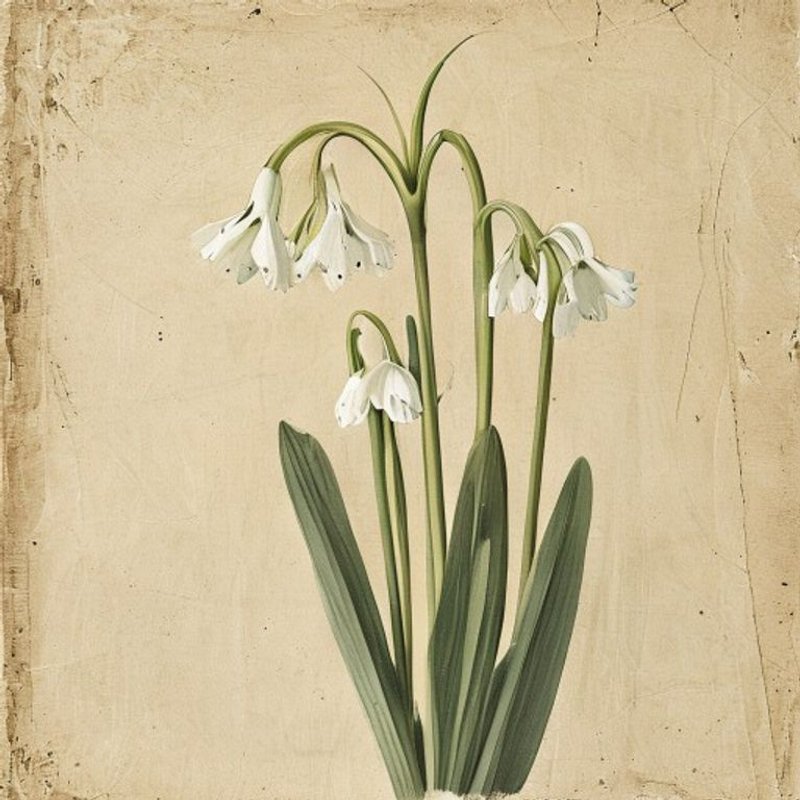
Pl. 7104 — Galanthus nivalis
Galanthus nivalisGalanthus nivalisGalanthus nivalisGalanthus nivalisGalanthus nivalisGalanthus nivalisGalanthus nivalisGalanthus nivalisGalanthus nivalisGalanthus nivalisGalanthus nivalisGalanthus nivalisGalanthus nivalisGalanthus nivalis
IOverview
Overview
Snowdrop (Galanthus nivalis) is a small, delicate bulbous plant native to central and southeastern Europe, including Albania, Austria, Belarus, Bulgaria, France, Germany, Greece, Hungary, Italy, Poland, Romania, Spain, Switzerland, Turkey-in-Europe, Ukraine, and Yugoslavia. Known for its early spring blooms of pure white, six-petaled flowers that resemble snowflakes, it is both edible and ornamental. The plant thrives in moist, medium to heavy clay soils with a pH between 7 and 7.5, reaching heights of about 0.2 meters. Its bulb is the edible part, making it a unique addition to early spring gardens or naturalized settings.
Quick answers
What is Snowdrop?
Snowdrop (Galanthus nivalis) is a small, delicate bulbous plant native to central and southeastern Europe, including Albania, Austria, Belarus, Bulgaria, France, Germany, Greece, Hungary, Italy, Poland, Romania, Spain, Switzerland, Turkey-in-Europe, Ukraine, and Yugoslavia.
Growingconditions · propagation · uses
VCultivation
Cultivation
Snowdrop thrives in moist, medium to heavy (clay) soil with a pH of 7-7.5. It prefers partial shade and is hardy in temperate regions from zones 3-9. For propagation, divide the bulbs in late summer or fall after flowering. Water regularly during growth but allow the soil to dry slightly between waterings. This forb/herb grows to about 0.2 meters tall and is native to several European countries including Albania, Austria, Belarus, Bulgaria, France, Germany, Greece, Hungary, Italy, Poland, Romania, Spain, Switzerland, Turkey-in-Europe, Ukraine, and Yugoslavia.
Light
4/10
Water
Moist
Soil
Medium, Heavy (clay)
Hardiness
3-9
Habit
Forb/herb
Mature size
0.2 m tall
Soil pH
7–7.5
For first-time growers
How to grow Snowdrop for the first time
8steps
Start with planting Snowdrops in a well-prepared soil and follow simple care steps for a rewarding beginner project.
- 1
What you'll need
Snowdrop bulbs, a garden fork or trowel.
- 2
Best time to plant
Plant in late autumn, around September to November.
- 3
Soil and container prep
Choose a spot with moist, well-draining soil. Amend the soil with compost if needed.
- 4
Sowing or transplanting
Dig a hole 5-7 cm deep and plant each bulb about 10 cm apart.
- 5
First two weeks
Water sparingly to keep the soil moist but not waterlogged. Avoid overwatering.
- 6
Ongoing care
Mulch around the plants in winter for extra protection and remove it in spring as growth begins.
- 7
Harvest or pruning
No need to harvest; simply allow the foliage to die back naturally after flowering.
- 8
Common mistakes
Planting too deep, overwatering, neglecting mulching, not allowing natural leaf decay, and planting in overly dry soil.
VIEdible & utility
Edible & utility
Edible parts:Bulb
Edible uses: The snowdrop's bulb is edible and can be consumed raw or cooked. Typically, the bulbs are prepared by boiling to soften them before use in various culinary applications. Skip
Contextrange · companions · related
VIIDistribution
18 native · 12 introduced
Distribution
18 native · 12 introducedDistribution across1 continent· 18 native· 12 introduced
Europe16 regions
native (14)AlbaniaAustriaBelarusBulgariaFranceGermanyGreeceHungaryItalyPolandRomaniaSpainSwitzerlandUkraine
introduced (2)NorwaySweden
Broader regions
native:Turkey-in-Europe, Yugoslavia, Czechoslovakia
introduced:Masachusettes, Maryland, Massachusetts, Michigan, New Brunswick, New Jersey, New York, Newfoundland, North Carolina, Ohio
IXSpecimen gallery
1 image
Specimen gallery
1 imageXI
Explore further
Companion planting
Growing zone
XII
About this entry
- Last updated
- Citation
- How to cite this entry · Submit a correction
Back to the cataloguePlant id · 71047e94-e4bb-457d-a4ba-5a4c314a5be7
Decision aid
Choosing between Snowdrop and something else?
Continue reading
❦❦❦❦
Endpaper · archive updates
Get archive updates
Occasional email when substantial new content lands — plant profiles, seasonal growing notes, folk-remedy additions. Free, no tracking, unsubscribe anytime.