
Upland Cotton
IOverview
Overview
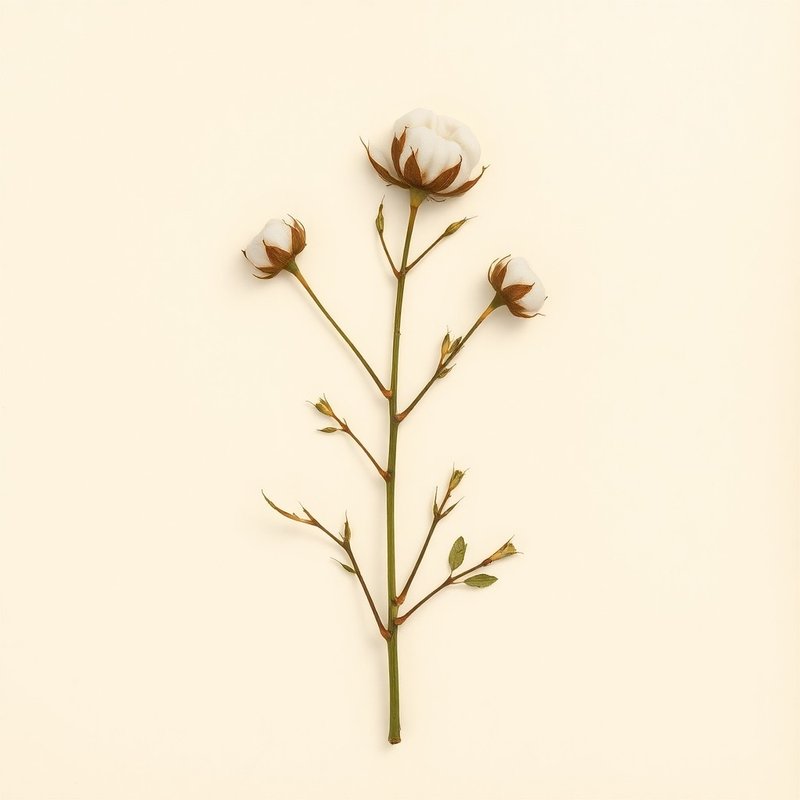
Upland Cotton (Gossypium hirsutum) is a shrub or subshrub that can grow up to 2 meters in height and thrives in full sun with moist soil, adapting well to light (sandy), medium, and heavy (clay) conditions. Native to regions including Aruba, Brazil Northeast, Colombia, Costa Rica, Ecuador, El Salvador, Fiji, French Guiana, and other parts of Central and South America, it is also cultivated in various islands across the Pacific and Caribbean. Known for its edible seeds, Upland Cotton has been an important crop for centuries, valued not only for its fibers but also as a food source. The distinctive feature of this plant lies in its dense, soft hairs covering the seed pods, which are crucial for both identification and practical uses. The seeds can be consumed, though caution should be exercised due to potential allergenic properties. While primarily cultivated for its fiber, Upland Cotton's edible seeds make it a versatile crop with multiple applications. Upland Cotton thrives in full sun and requires moist soil that can be light (sandy), medium, or heavy (clay). It is hardy in zones 5-10, making it suitable for temperate regions. This plant grows up to 2 meters tall and can be cultivated as a tree, subshrub, or shrub. For propagation, gardeners should focus on seed growth. Ensure the soil remains consistently moist but well-draining to prevent root rot.
What is Upland Cotton?
Upland Cotton (Gossypium hirsutum) is a shrub or subshrub that can grow up to 2 meters in height and thrives in full sun with moist soil, adapting well to light (sandy), medium, and heavy (clay) conditions.
VCultivation
Cultivation
How to grow Upland Cotton for the first time
Start with Upland Cotton as a simple, low-maintenance plant for beginners.
- 1
What you'll need
Seeds or seedlings, a container or garden bed, potting soil if using containers.
- 2
Best time to plant
Plant in spring after the last frost when temperatures are consistently above 15°C (60°F).
- 3
Soil and container prep
Use well-draining soil with a pH between 6.0 and 7.0. Ensure containers have drainage holes.
- 4
Sowing or transplanting
Start seeds indoors about 4-6 weeks before the last frost, then transplant outdoors when weather is warm.
- 5
First two weeks
Water regularly to keep soil moist but not waterlogged. Provide full sun exposure.
- 6
Ongoing care
Water deeply once a week, more often in dry spells. Fertilize every 4-6 weeks with a balanced fertilizer.
- 7
Harvest or pruning
Prune to maintain shape and remove dead branches. Harvest seeds when pods turn brown and dry.
- 8
Common mistakes
Overwatering, planting in heavy soil, not providing enough sunlight, neglecting regular fertilization.
VIEdible & utility
Edible & utility
VIIDistribution
29 native · 81 introduced
Distribution
29 native · 81 introducedIXSpecimen gallery
1 image
Specimen gallery
1 imageExplore further
About this entry
- Last updated
- Citation
- How to cite this entry · Submit a correction
Continue reading
Get archive updates
Occasional email when substantial new content lands — plant profiles, seasonal growing notes, folk-remedy additions. Free, no tracking, unsubscribe anytime.