
Perennial Ryegrass
Lolium perenne
Educational content — not medical, botanical, or professional advice. Plant identification, safety, and edibility depend on local conditions, cultivars, and correct identification. Consult a qualified botanist or forager before consuming or handling wild specimens. How we source & review →
Garden journal pausedUse profile notes below
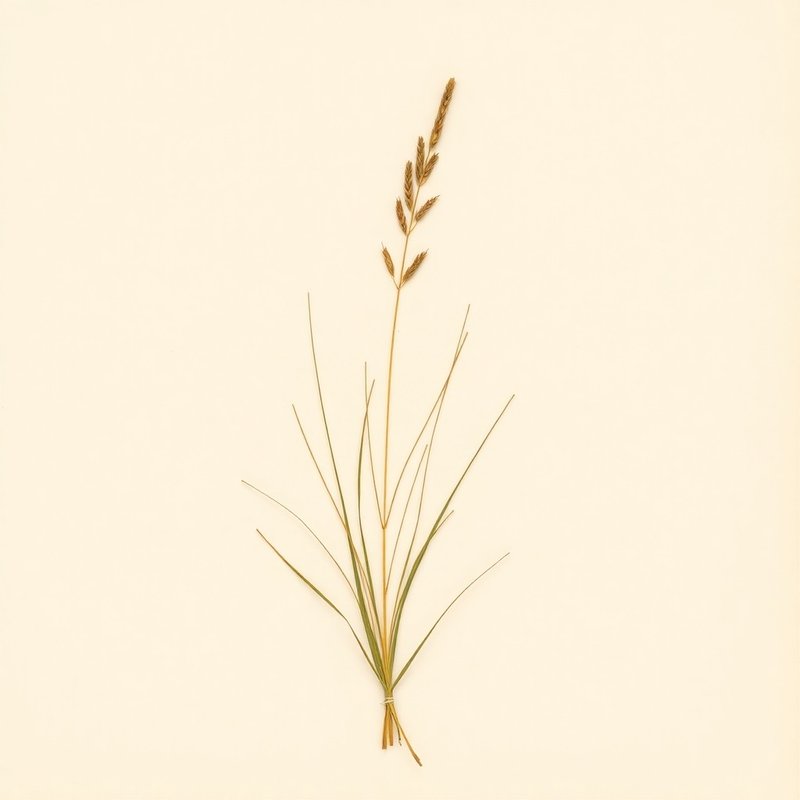
Pl. 24B7 — Lolium perenne
Lolium perenneLolium perenneLolium perenneLolium perenneLolium perenneLolium perenneLolium perenneLolium perenneLolium perenneLolium perenneLolium perenneLolium perenneLolium perenneLolium perenne
IOverview
Overview
Perennial Ryegrass (Lolium perenne) is a hardy, perennial grass native to New Guinea and the Sinai Peninsula. This light-loving plant grows up to one meter tall and forms dense stands, making it an excellent choice for lawns or ornamental purposes. Perennial Ryegrass thrives in various soil types, including light (sandy), medium, and heavy (clay) soils, with a preferred pH range of 5.2 to 7.5. It is well-suited for hardiness zones 5-7, ensuring its persistence in temperate regions. The edible seeds of Perennial Ryegrass are harvested for consumption, often used raw or cooked, and can be ground into flour for baking. The grass also adds a nutty flavor to salads when added fresh. Its distinctive fine foliage texture and rapid growth rate make it a popular choice among gardeners and landscapers. While primarily known for its ornamental value and utility in biomass production, Perennial Ryegrass is adaptable and can be found growing in diverse habitats introduced into numerous regions across Europe, Asia, and North Africa. When handling or consuming any part of this plant, exercise caution as no medicinal claims are supported by the provided data.
Quick answers
What is Perennial Ryegrass?
Perennial Ryegrass (Lolium perenne) is a hardy, perennial grass native to New Guinea and the Sinai Peninsula. This light-loving plant grows up to one meter tall and forms dense stands, making it an excellent choice for lawns or ornamental purposes.
Growingconditions · propagation · uses
VCultivation
Cultivation
Perennial Ryegrass thrives in moist conditions and prefers light (sandy), medium, or heavy (clay) soils with a pH between 5.2 and 7.5. It is best suited for areas with a hardiness zone of 5-7, making it hardy in temperate regions. This grass grows to a height of about 1 meter and can be propagated through seed. For optimal growth, provide ample light but avoid direct sunlight that might be too intense. Water regularly to maintain moist soil conditions. Harvest the edible parts by collecting seeds.
Light
7/10
Water
Moist
Soil
Light (sandy), Medium, Heavy (clay)
Hardiness
5-7
Life cycle
Perennial
Habit
Graminoid
Mature size
1.0 m tall
Soil pH
5.2–7.5
For first-time growers
How to grow Perennial Ryegrass for the first time
8steps
Start with Perennial Ryegrass as a simple ground cover for beginners.
- 1
What you'll need
Perennial Ryegrass seeds, a garden fork or spade, and a rake.
- 2
Best time to plant
Plant in spring or fall when the soil is moist but not waterlogged.
- 3
Soil and container prep
Prepare loose, well-draining soil with a pH between 5.2 and 7.5. Rake the area smooth.
- 4
Sowing or transplanting
Broadcast seeds evenly over the prepared area and lightly rake them in. Keep the soil moist until germination.
- 5
First two weeks
Water regularly to keep the soil consistently moist, but avoid waterlogging. Thin out seedlings if they grow too close together.
- 6
Ongoing care
Mow or trim as needed to maintain a neat appearance and prevent seeding. Avoid overwatering in summer.
- 7
Harvest or pruning
Perennial Ryegrass is not typically harvested for food, but you can mow it regularly for maintenance.
- 8
Common mistakes
Overwatering, planting too late in the season, and neglecting to thin out seedlings are common pitfalls.
VIEdible & utility
Edible & utility
Edible parts:Seed
Edible uses: Perennial Ryegrass seeds are edible and can be consumed raw or cooked. They are often used in sprouting or ground into flour for baking. The grass is also sometimes added to salads for a nutty flavor. Skip the medical claims and focus on these simple preparation methods.
Other uses:Biomass
Contextrange · companions · related
VIIDistribution
68 native · 207 introduced
Distribution
68 native · 207 introducedDistribution across5 continents· 68 native· 207 introduced
Europe50 regions
native (24)AlbaniaAustriaBelarusBelgiumBulgariaCyprusDenmarkFranceGermanyGreeceHungaryIrelandItalyNetherlandsNorwayPolandPortugalRomaniaRussiaSpainSwedenSwitzerlandUkraineUnited Kingdom
introduced (26)AlbaniaAustriaBelarusBelgiumBulgariaCyprusDenmarkFinlandFranceGermanyGreeceHungaryIcelandIrelandItalyNetherlandsNorwayPolandPortugalRomaniaRussiaSpainSwedenSwitzerlandUkraineUnited Kingdom
Asia26 regions
native (9)AfghanistanIranIraqKazakhstanNepalPakistanPalestineTurkeyTurkmenistan
introduced (17)AfghanistanChinaGeorgiaIranIraqJapanKazakhstanNepalPakistanPalestineSaudi ArabiaSouth KoreaSri LankaTurkeyTurkmenistanUzbekistanYemen
Americas15 regions
introduced (15)BahamasBoliviaColombiaCosta RicaDominican RepublicEcuadorGreenlandGuatemalaHaitiHondurasPeruPuerto RicoUnited StatesUruguayVenezuela
Africa17 regions
native (6)AlgeriaEgyptLibyaMauritaniaMoroccoTunisia
introduced (11)AlgeriaEgyptEritreaLesothoLibyaMauritaniaMauritiusMoroccoTanzaniaTunisiaZimbabwe
Oceania1 region
introduced (1)New Caledonia
Broader regions
native:Baltic States, Czechoslovakia, East Aegean Is., East Himalaya, Kirgizstan, Krasnoyarsk, Kriti, Lebanon-Syria, New Guinea, Selvagens, Sinai, Tadzhikistan, Transcaucasus, Turkey-in-Europe, West Himalaya, Yugoslavia
introduced:Alabama, Alberta, Amsterdam-St.Paul Is, Amur, Antipodean Is., Argentina Northeast, Argentina Northwest, Argentina South, Arizona, Arkansas, Baltic States, Brazil South, British Columbia, California, Cape Provinces, Chagos Archipelago, Chatham Is., Chile Central, Chile South, Colorado, Connecticut, Crozet Is., Czechoslovakia, Delaware, District of Columbia, East Aegean Is., East Himalaya, Easter Is., Falkland Is., Florida, Føroyar, Free State, Galápagos, Gulf States, Idaho, Illinois, Indiana, Iowa, Jawa, Juan Fernández Is., Kansas, Kentucky, Kerguelen, Kermadec Is., Khabarovsk, Kirgizstan, Krasnoyarsk, Kriti, KwaZulu-Natal, Labrador, Lebanon-Syria, Louisiana, Maine, Malaya, Manitoba, Maryland, Masachusettes, Mexico Northwest, Mexico Southwest, Michigan, Minnesota, Mississippi, Missouri, Montana, Nebraska, Nevada, New Brunswick, New Guinea, New Hampshire, New Jersey, New Mexico, New South Wales, New York, New Zealand North, New Zealand South, Newfoundland, Norfolk Is., North Carolina, North Dakota, Northern Provinces, Northern Territory, Northwest Territorie, Nova Scotia, Ohio, Oklahoma, Ontario, Oregon, Panamá, Pennsylvania, Primorye, Prince Edward I., Québec, Queensland, Réunion, Rhode I., Sakhalin, Saskatchewan, Selvagens, South Australia, South Carolina, South Dakota, Tadzhikistan, Tasmania, Tennessee, Texas, Transcaucasus, Tristan da Cunha, Turkey-in-Europe, Utah, Vermont, Victoria, Virginia, Washington, West Himalaya, West Virginia, Western Australia, Wisconsin, Wyoming, Yugoslavia, Yukon
IXSpecimen gallery
1 image
Specimen gallery
1 imageXI
Explore further
Companion planting
Growing zone
Native to
XII
About this entry
- Last updated
- Citation
- How to cite this entry · Submit a correction
Back to the cataloguePlant id · 24b7e750-e114-40e4-8607-90e46a44b33f
Decision aid
Choosing between Perennial Ryegrass and something else?
Continue reading
❦❦❦❦
Endpaper · archive updates
Get archive updates
Occasional email when substantial new content lands — plant profiles, seasonal growing notes, folk-remedy additions. Free, no tracking, unsubscribe anytime.
Newsletter returning soon.
We are rebuilding the update list around a lightweight editorial workflow. New dispatches will resume after the next content review cycle.