
Tassel Hyacinth
Muscari comosum
Educational content — not medical, botanical, or professional advice. Plant identification, safety, and edibility depend on local conditions, cultivars, and correct identification. Consult a qualified botanist or forager before consuming or handling wild specimens. How we source & review →
Garden journal pausedUse profile notes below
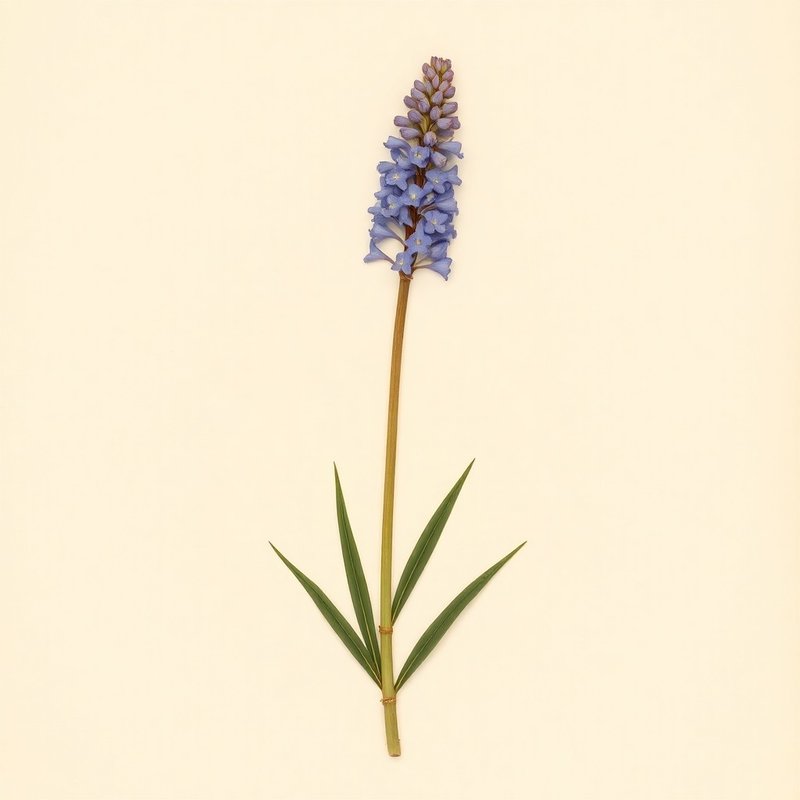
Pl. 7D97 — Muscari comosum
Muscari comosumMuscari comosumMuscari comosumMuscari comosumMuscari comosumMuscari comosumMuscari comosumMuscari comosumMuscari comosumMuscari comosumMuscari comosumMuscari comosumMuscari comosumMuscari comosum
IOverview
Overview
Tassel Hyacinth (Muscari comosum) is a flowering plant native to a wide range of Mediterranean and Middle Eastern countries, including Albania, Algeria, Austria, Bulgaria, and others. This species thrives in diverse habitats, growing in light, medium, or heavy clay soils, and can tolerate both dry and moist conditions. It reaches a height of up to 0.5 meters and is categorized as a forb/herb, with moderate light requirements and hardiness zones ranging from 4 to 8. The distinctive feature of Tassel Hyacinth is its clusters of small, tassel-like flowers, which make it both ornamental and useful for culinary purposes. The edible roots can be prepared in various ways, typically harvested and either eaten raw or cooked to enhance their flavor. They can also be dried for later use, preserving their nutritional value. However, it is important to note that while the roots are edible, specific preparation methods were not detailed. This plant is native to countries such as Albania, Algeria, Austria, Bulgaria, and many others, and has been introduced to regions like Alabama, Belgium, Denmark, Georgia, and Great Britain. Its introduction into these areas has made it a valuable addition to gardens and landscapes, offering both aesthetic appeal and culinary benefits. While Tassel Hyacinth is generally well-suited to its growing conditions, it has the potential to become a weed in certain environments.
Quick answers
What is Tassel Hyacinth?
Tassel Hyacinth (Muscari comosum) is a flowering plant native to a wide range of Mediterranean and Middle Eastern countries, including Albania, Algeria, Austria, Bulgaria, and others. This species thrives in diverse habitats, growing in light, medium, or heavy clay soils, and can tolerate both dry and moist conditions.
Growingconditions · propagation · uses
VCultivation
Cultivation
Tassel Hyacinth thrives in well-drained soils with a pH between 7 and 7.5, preferring light (sandy), medium, or heavy (clay) types. It requires moist to dry conditions and is hardy in temperate regions from zones 4-8. This plant prefers partial shade but can tolerate full sun in cooler climates. For best results, propagate by seed or division in early spring or fall. The edible root can be harvested after the plant has flowered.
Light
7/10
Water
Dry, Moist
Soil
Light (sandy), Medium, Heavy (clay)
Hardiness
4-8
Habit
Forb/herb
Mature size
0.5 m tall
Soil pH
7–7.5
For first-time growers
How to grow Tassel Hyacinth for the first time
8steps
Start with Tassel Hyacinth as a simple, low-maintenance addition to your garden.
- 1
What you'll need
A packet of Muscari comosum seeds or small plants, a trowel, and some compost.
- 2
Best time to plant
Plant in autumn for spring blooms or in early spring for summer flowers.
- 3
Soil and container prep
Choose well-draining soil with a pH of 7-7.5. Ensure containers have drainage holes if planting in pots.
- 4
Sowing or transplanting
Plant seeds 2 inches deep and 3-4 inches apart, or transplant small plants into the prepared soil.
- 5
First two weeks
Water sparingly to avoid rot. Keep the soil moist but not waterlogged.
- 6
Ongoing care
Water when the top inch of soil feels dry and mulch around the base for moisture retention.
- 7
Harvest or pruning
Prune dead flower heads to encourage more blooms. No need to harvest roots as they are not edible.
- 8
Common mistakes
Overwatering, planting in heavy soil, and neglecting to mulch are common issues.
VIEdible & utility
Edible & utility
Edible parts:Root
Edible uses: The Tassel Hyacinth's root is edible and can be prepared in various ways. Typically, the roots are harvested and either eaten raw or cooked to enhance their flavor. They can also be dried for later use, preserving their nutritional value. Skip the specific preparation methods as detailed data on culinary uses was not provided.
Other uses:Fragrance
Contextrange · companions · related
VIIDistribution
49 native · 36 introduced
Distribution
49 native · 36 introducedDistribution across3 continents· 49 native· 36 introduced
Europe22 regions
native (17)AlbaniaAustriaBelarusBulgariaCyprusFranceGermanyGreeceHungaryItalyPolandPortugalRomaniaRussiaSpainSwitzerlandUkraine
introduced (5)BelgiumDenmarkNetherlandsPolandUnited Kingdom
Asia9 regions
native (8)AfghanistanIranIraqPakistanPalestineTurkeyTurkmenistanUzbekistan
introduced (1)Georgia
Africa5 regions
native (5)AlgeriaEgyptLibyaMoroccoTunisia
Broader regions
native:Czechoslovakia, East Aegean Is., Kirgizstan, Kriti, Lebanon-Syria, Sinai, Tadzhikistan, Transcaucasus, Turkey-in-Europe, Yugoslavia
introduced:Alabama, Arkansas, Connecticut, Delaware, District of Columbia, Florida, Illinois, Indiana, Kentucky, Kuril Is., Louisiana, Maryland, Masachusettes, Michigan, Mississippi, Missouri, New Mexico, New York, North Carolina, Ohio, Oregon, Pennsylvania, South Australia, South Carolina, Tennessee, Texas, Virginia, Washington, West Virginia, Wisconsin
IXSpecimen gallery
1 image
Specimen gallery
1 imageXI
Explore further
Companion planting
Growing zone
Native to
XII
About this entry
- Last updated
- Citation
- How to cite this entry · Submit a correction
Back to the cataloguePlant id · 7d97b904-2c11-4044-a76a-28ee9d7bfbf7
Decision aid
Choosing between Tassel Hyacinth and something else?
Continue reading
❦❦❦❦
Endpaper · archive updates
Get archive updates
Occasional email when substantial new content lands — plant profiles, seasonal growing notes, folk-remedy additions. Free, no tracking, unsubscribe anytime.
Newsletter returning soon.
We are rebuilding the update list around a lightweight editorial workflow. New dispatches will resume after the next content review cycle.