
Prickly Pear
IOverview
Overview
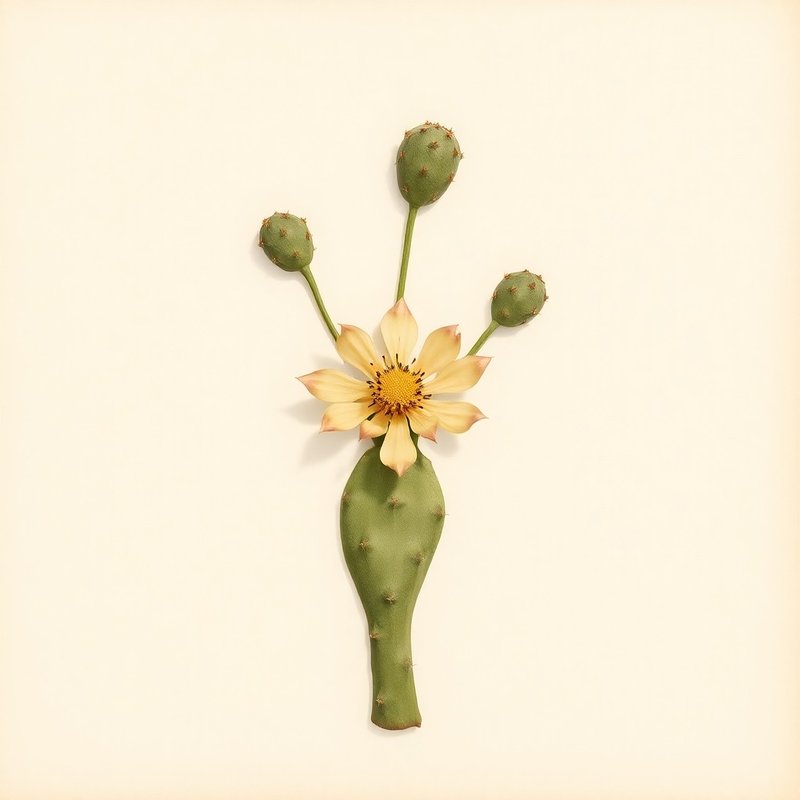
Prickly Pear (Opuntia fragilis) is a perennial shrub native to the western and central United States, as well as parts of Canada, including Alberta, Arizona, British Columbia, California, Colorado, Idaho, Illinois, Iowa, and other regions. This hardy plant thrives in full sun to partial shade and prefers light or medium soil types, making it well-suited for dry, sunny conditions. The Prickly Pear is known for its edible fruit, leaves, and seeds, which can be enjoyed in various forms such as raw, in jams and jellies, or cooked. The pads, or nopales, are commonly prepared by peeling and slicing before cooking, either sautéed or grilled. The fruit, often called tuna, is typically eaten raw or used in culinary applications. Additionally, the seeds can be harvested and roasted for a nutty flavor. This plant is also valued for its utility in erosion control and as a ground cover, and it is deer resistant. However, it has the potential to become a weed in some areas. Prickly Pear can be propagated through seed transplantation or direct sowing, with optimal germination temperatures between 20-30°C (68-86°F) and a germination time ranging from 5 to 180 days. Its spines can be a challenge, but its hardiness from zones 4-10 makes it a resilient addition to gardens or landscapes where conditions are dry and sunny.
What is Prickly Pear?
Prickly Pear (Opuntia fragilis) is a perennial shrub native to the western and central United States, as well as parts of Canada, including Alberta, Arizona, British Columbia, California, Colorado, Idaho, Illinois, Iowa, and other regions.
VCultivation
Cultivation
- Propagation
- Seed - transplant, Seed - direct sow
- Germination
- 5-180 days
How to grow Prickly Pear for the first time
Start with easy-to-grow Prickly Pear and focus on basic care.
- 1
What you'll need
Prickly Pear seeds or small plants, a sunny spot in your garden, and some gloves.
- 2
Best time to plant
Plant in spring when the soil is warm and moist but not waterlogged.
- 3
Soil and container prep
Choose a well-draining location with light or medium soil. Prickly Pear prefers sandy or loamy conditions.
- 4
Sowing or transplanting
Direct sow seeds in the ground or start them indoors, then transplant seedlings to your garden after they have grown some leaves.
- 5
First two weeks
Keep the soil slightly moist but avoid overwatering. Monitor for pests and remove any unwanted weeds.
- 6
Ongoing care
Water sparingly, especially once established. Prune to shape or remove dead branches as needed.
- 7
Harvest or pruning
Prune in late winter before new growth starts to maintain the plant's shape and remove any damaged parts.
- 8
Common mistakes
Overwatering, planting in poorly drained soil, not wearing gloves when handling prickles.
VIEdible & utility
Edible & utility
VIIDistribution
26 native · 2 introduced
Distribution
26 native · 2 introducedIXSpecimen gallery
1 image
Specimen gallery
1 imageExplore further
About this entry
- Last updated
- Citation
- How to cite this entry · Submit a correction
Continue reading
Get archive updates
Occasional email when substantial new content lands — plant profiles, seasonal growing notes, folk-remedy additions. Free, no tracking, unsubscribe anytime.