
Perennial Rice
Oryza hybrids
Educational content — not medical, botanical, or professional advice. Plant identification, safety, and edibility depend on local conditions, cultivars, and correct identification. Consult a qualified botanist or forager before consuming or handling wild specimens. How we source & review →
Garden journal pausedUse profile notes below
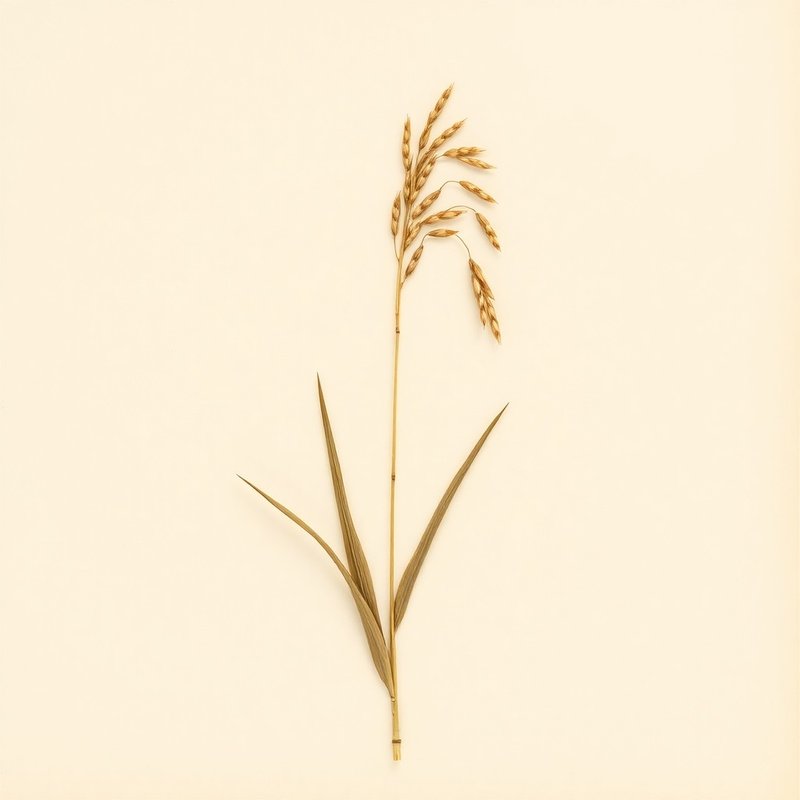
Pl. 5609 — Oryza hybrids
Oryza hybridsOryza hybridsOryza hybridsOryza hybridsOryza hybridsOryza hybridsOryza hybridsOryza hybridsOryza hybridsOryza hybridsOryza hybridsOryza hybridsOryza hybridsOryza hybrids
IOverview
Overview
Perennial Rice (Oryza hybrids) is a unique form of rice that grows as a perennial rather than an annual, making it more sustainable and easier to manage in certain environments. Native to the North-Central, South-Central, and Southeast regions of China, this plant has gained attention for its edible seed parts, which can be harvested year after year due to its perennial nature. Perennial Rice thrives in moist or wet conditions and prefers light (sandy), medium, or heavy (clay) soils with a pH between 7 and 7.5. Its distinctive feature is the ability to grow up to 2 meters tall while maintaining a graminoid habit, setting it apart from traditional annual rice varieties. This perennial plant requires ample sunlight but can tolerate partial shade. For cultivation, ensure the soil remains consistently moist and provide plenty of space as it grows to a height of 2 meters. Propagate through seed or division. Regular watering is essential for healthy growth, especially during dry periods. The seeds can be eaten raw or cooked in various dishes and are also suitable for drying to extend their shelf life. While primarily used for its edible value, caution should be exercised when handling or consuming any plant, as specific preparation methods were not provided.
Quick answers
What is Perennial Rice?
Perennial Rice (Oryza hybrids) is a unique form of rice that grows as a perennial rather than an annual, making it more sustainable and easier to manage in certain environments.
Growingconditions · propagation · uses
VCultivation
Cultivation
Perennial Rice thrives in moist to wet conditions and prefers light (sandy), medium, or heavy (clay) soils with a pH of 7–7.5. It is hardy in temperate regions, typically growing from zones 7-12. This perennial plant requires ample sunlight but can tolerate partial shade. For cultivation, ensure the soil remains consistently moist and provide plenty of space as it grows to a height of 2 meters. Propagate through seed or division. Regular watering is essential for healthy growth, especially during dry periods.
Light
9/10
Water
Moist, Wet, Water
Soil
Light (sandy), Medium, Heavy (clay)
Hardiness
7-12
Life cycle
Perennial
Habit
Graminoid
Mature size
2.0 m tall
Soil pH
7–7.5
For first-time growers
How to grow Perennial Rice for the first time
8steps
Start with a simple, moist environment and basic care for your perennial rice.
- 1
What you'll need
A container or garden bed, seeds or seedlings, water source.
- 2
Best time to plant
Plant in spring when the soil is warm but not hot.
- 3
Soil and container prep
Ensure the soil is moist, with a pH of 7-7.5; use light, medium, or heavy soil types.
- 4
Sowing or transplanting
Direct sow seeds in the prepared soil or transplant seedlings gently.
- 5
First two weeks
Keep the soil consistently moist and provide partial shade if needed.
- 6
Ongoing care
Water regularly, especially during dry spells; mulch to retain moisture.
- 7
Harvest or pruning
Prune any dead leaves or stems to maintain plant health; harvest seeds when they are fully mature.
- 8
Common mistakes
Overwatering, planting in too sunny a location, neglecting regular watering.
VIEdible & utility
Edible & utility
Edible parts:Seed
Edible uses: The perennial rice plant (Oryza hybrids) is edible and its seeds are typically harvested for consumption. The seeds can be eaten raw or cooked in various dishes. They are also suitable for drying to extend their shelf life. Skip the preparation details as specific methods were not provided.
Contextrange · companions · related
VIIDistribution
3 native · 136 introduced
Distribution
3 native · 136 introducedDistribution across4 continents· 3 native· 136 introduced
Europe12 regions
introduced (12)AlbaniaBulgariaCyprusFranceGreeceHungaryItalyPortugalRomaniaRussiaSpainUkraine
Asia27 regions
native (1)China
introduced (26)AfghanistanBangladeshCambodiaChinaGeorgiaIndiaIranIraqJapanKazakhstanLaosMyanmarNepalPakistanPalestinePhilippinesSaudi ArabiaSouth KoreaSri LankaTaiwanThailandTurkeyTurkmenistanUzbekistanVietnamYemen
Americas16 regions
introduced (16)BelizeBoliviaColombiaCosta RicaCubaDominican RepublicEcuadorEl SalvadorGuatemalaHaitiHondurasJamaicaNicaraguaPeruPuerto RicoVenezuela
Africa25 regions
introduced (25)AlgeriaBeninBurkina FasoBurundiCameroonChadComorosCôte d'IvoireEgyptEquatorial GuineaGambiaGuineaGuinea-BissauMadagascarMaliMauritaniaMauritiusMoroccoMozambiqueNigerRwandaSenegalSeychellesTanzaniaTogo
Broader regions
introduced:Alabama, Andaman Is., Arkansas, Borneo, Brazil North, Brazil Northeast, Brazil South, Brazil Southeast, Brazil West-Central, California, Central African Repu, Chile Central, Czechoslovakia, East Himalaya, Gulf of Guinea Is., Hainan, Illinois, Jawa, Khabarovsk, Leeward Is., Lesser Sunda Is., Louisiana, Malaya, Mexico Gulf, Mexico Southeast, Mexico Southwest, Mississippi, Missouri, Nansei-shoto, New Guinea, New South Wales, Nicobar Is., North Carolina, Northern Territory, Oklahoma, Panamá, Primorye, Queensland, Santa Cruz Is., South Carolina, Sumatera, Tadzhikistan, Tennessee, Texas, Trinidad-Tobago, Turkey-in-Europe, Virginia, West Himalaya, Western Australia, Windward Is., Yugoslavia, Zaïre
IXSpecimen gallery
1 image
Specimen gallery
1 imageXI
Explore further
Companion planting
Growing zone
XII
About this entry
- Last updated
- Citation
- How to cite this entry · Submit a correction
Back to the cataloguePlant id · 5609ac0a-5eca-48e1-8e9f-fa6d6cddf716
Decision aid
Choosing between Perennial Rice and something else?
Continue reading
❦❦❦❦
Endpaper · archive updates
Get archive updates
Occasional email when substantial new content lands — plant profiles, seasonal growing notes, folk-remedy additions. Free, no tracking, unsubscribe anytime.
Newsletter returning soon.
We are rebuilding the update list around a lightweight editorial workflow. New dispatches will resume after the next content review cycle.