
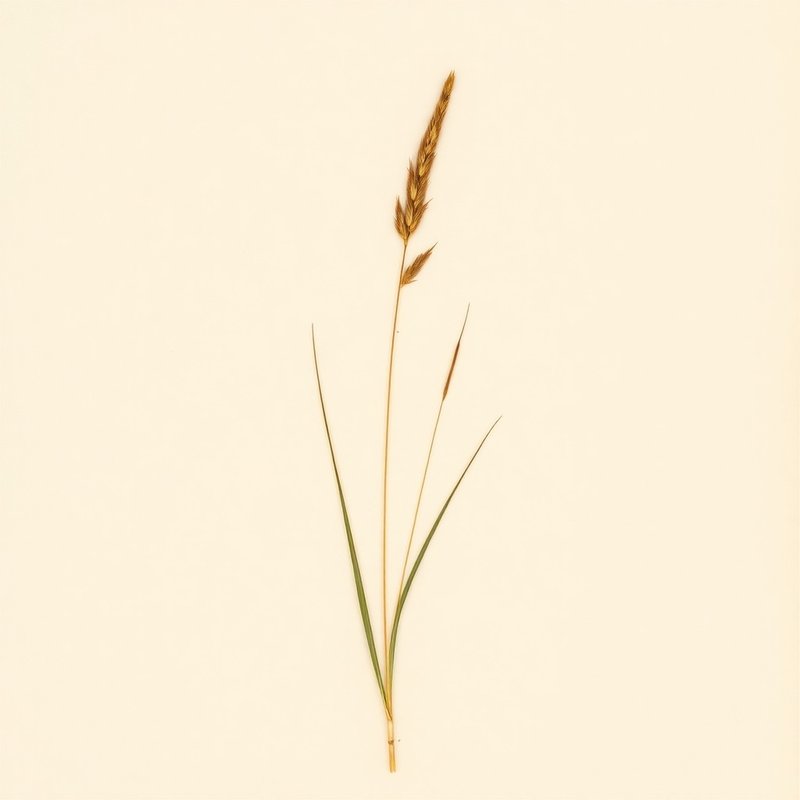
Desert Grass Turgid panic grass
IOverview
Overview
Desert Grass Turgid panic grass (Panicum turgidum) is a perennial graminoid native to regions including Algeria, Benin, Burkina Faso, Chad, Congo, Cyprus, Djibouti, Egypt, and other parts of Africa, the Middle East, and Asia. This plant thrives in full sun and can tolerate both dry and moist conditions, making it adaptable to various environments with light (sandy) or medium soil types. Standing at about 1.5 meters tall, it is known for its edible roots, seeds, and shoots, which are utilized in local cuisine. The seeds can be eaten raw or cooked, while roots and shoots are often prepared by boiling before consumption. Its presence in arid and semi-arid regions highlights its resilience and importance as a food source. This grass is also valuable as animal feed, contributing to its utility in agricultural contexts. While primarily an edible plant, its hardiness and adaptability make it a valuable resource in regions with diverse environmental conditions.
What is Desert Grass Turgid panic grass?
Desert Grass Turgid panic grass (Panicum turgidum) is a perennial graminoid native to regions including Algeria, Benin, Burkina Faso, Chad, Congo, Cyprus, Djibouti, Egypt, and other parts of Africa, the Middle East, and Asia.
VCultivation
Cultivation
How to grow Desert Grass Turgid panic grass for the first time
Start with Desert Grass Turgid panic grass to gain experience in basic gardening.
- 1
What you'll need
A small pot, quality soil, and seeds or a young plant.
- 2
Best time to plant
Plant in spring when the weather starts warming up.
- 3
Soil and container prep
Use well-draining soil and ensure your container has drainage holes.
- 4
Sowing or transplanting
Direct sow seeds outdoors or start them indoors a few weeks before planting outside.
- 5
First two weeks
Water sparingly to avoid waterlogging, keeping the soil moist but not soggy.
- 6
Ongoing care
Provide full sun and regular watering during dry periods. Fertilize lightly once a year.
- 7
Harvest or pruning
Prune dead leaves and stems to maintain plant health, but avoid harvesting for food as it's not commonly done.
- 8
Common mistakes
Overwatering, planting in heavy soil, neglecting sun exposure, and failing to prune regularly.
VIEdible & utility
Edible & utility
VIIDistribution
33 native · 0 introduced
Distribution
33 native · 0 introducedIXSpecimen gallery
1 image
Specimen gallery
1 imageExplore further
About this entry
- Last updated
- Citation
- How to cite this entry · Submit a correction
Continue reading
Get archive updates
Occasional email when substantial new content lands — plant profiles, seasonal growing notes, folk-remedy additions. Free, no tracking, unsubscribe anytime.