
Beth Root - Indian Balm
Trillium erectumfam. Melastomataceae
Educational content — not medical, botanical, or professional advice. Always consult a qualified clinician before using any herbal preparation — especially during pregnancy, breastfeeding, while on medication, or for children. How we source & review →
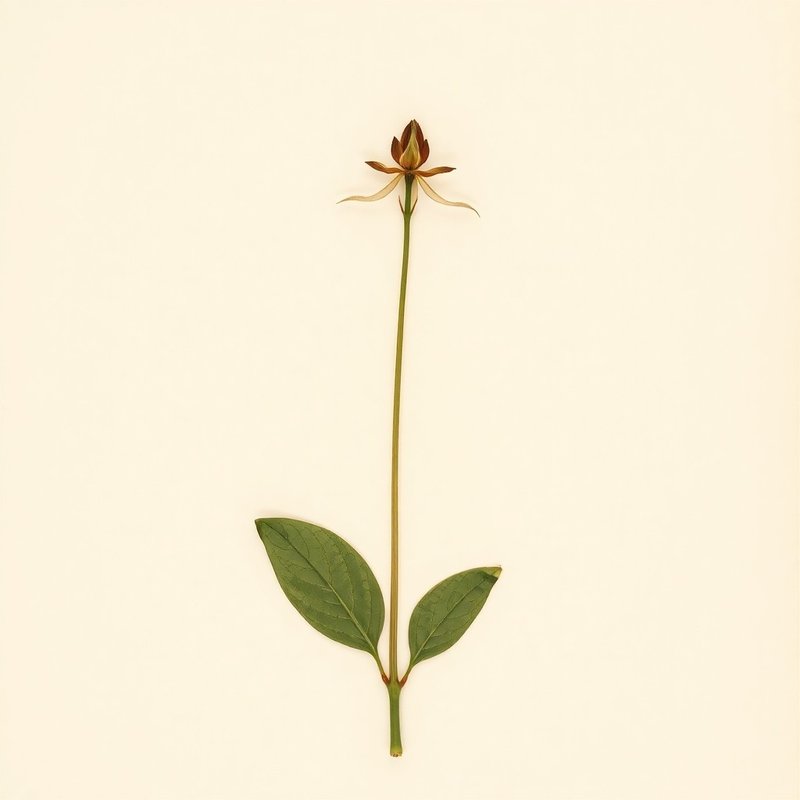
Pl. 32BE — Trillium erectum
Trillium erectumTrillium erectumTrillium erectumTrillium erectumTrillium erectumTrillium erectumTrillium erectumTrillium erectumTrillium erectumTrillium erectumTrillium erectumTrillium erectumTrillium erectumTrillium erectum
IOverview
Overview
Beth Root, also known as Indian Balm (Trillium erectum), is a perennial herb native to the eastern United States and Canada. Found in habitats ranging from Connecticut to Virginia and westward into Illinois, this plant thrives in moist conditions with partial sun to full shade. It can be identified by its light green leaves and white flowers that appear early spring. Beth Root has both edible and medicinal uses; its leaves are often harvested for consumption. Native Americans have long used the roots medicinally for various ailments. This trillium species adds a distinctive touch to woodland gardens with its elegant form and delicate blooms, making it an ornamental choice in suitable environments.
Quick answers
What is Beth Root - Indian Balm?
Beth Root, also known as Indian Balm (Trillium erectum), is a perennial herb native to the eastern United States and Canada. Found in habitats ranging from Connecticut to Virginia and westward into Illinois, this plant thrives in moist conditions with partial sun to full shade.
IV·bMixology suggestions
1 draft
Mixology suggestions
1 draftEditorial drafts. These pairings are AI-suggested from traditional herbal lore. Always verify with a qualified herbalist before brewing.
Growingconditions · propagation · uses
VCultivation
Cultivation
Beth Root, or Trillium erectum, thrives in partial to full shade and prefers moist soil that is light (sandy), medium, or heavy (clay). It grows well in hardiness zones 4-9 and can reach a height of about 0.4 meters. For best results, plant it in areas with rich, well-drained soil. Propagate through division or from seed. The edible leaves are the parts to harvest.
Light
Full sun, Partial sun/shade, Full shade
Water
Moist
Soil
Light (sandy), Medium, Heavy (clay)
Hardiness
4-9
Life cycle
Perennial
Habit
Forb/herb
Mature size
0.4 m tall
For first-time growers
How to grow Beth Root - Indian Balm for the first time
8steps
Start with planting Beth Root - Indian Balm in a partially shaded area for the best beginner experience.
- 1
What you'll need
Trillium erectum seeds or young plants, potting soil, a garden fork.
- 2
Best time to plant
Plant in early spring before new growth starts or in fall after leaves have dropped.
- 3
Soil and container prep
Use well-draining soil with a mix of light (sandy), medium, or heavy clay. Ensure the area has moist conditions.
- 4
Sowing or transplanting
For seeds, sow them shallowly in the soil. For young plants, dig a hole twice as wide and deep as the root ball.
- 5
First two weeks
Keep the soil consistently moist but not waterlogged. Avoid direct sunlight during this period.
- 6
Ongoing care
Provide partial shade to full shade, keep soil moist, and mulch around the plant to retain moisture.
- 7
Harvest or pruning
Prune dead leaves in late winter before new growth emerges. Avoid harvesting roots as they are not commonly used.
- 8
Common mistakes
Overwatering, planting in full sun, neglecting to mulch, and harvesting the roots too early.
VIEdible & utility
Edible & utility
Edible parts:Leaves
Edible uses: The Beth Root or Indian Balm (Trillium erectum) is edible and its leaves are commonly consumed. Typically, the young leaves are harvested in spring and prepared by boiling before being eaten raw or cooked in salads. They can also be dried for later use. Skip any part of the plant that isn't the leaf as it's not listed as an edible part.
Other uses:Fragrance
Contextrange · companions · related
VIIDistribution
27 native · 0 introduced
Distribution
27 native · 0 introducedDistribution across1 continent· 27 native
Asia1 region
native (1)Georgia
Broader regions
native:Delaware, Illinois, Massachusetts, Kentucky, Maine, Maryland, Michigan, New Brunswick, New Hampshire, New Jersey, New York, North Carolina, Nova Scotia, Ohio, Ontario, Pennsylvania, Québec, Rhode I., South Carolina, Tennessee, Vermont, West Virginia, Connecticut, Indiana, Masachusettes, Virginia
IXSpecimen gallery
1 image
Specimen gallery
1 imageXI
Explore further
Companion planting
Growing zone
XII
About this entry
- Last updated
- Citation
- How to cite this entry · Submit a correction
Back to the cataloguePlant id · 32bef1ed-c0aa-47e0-b9e7-b59e088db180
Decision aid
Choosing between Beth Root - Indian Balm and something else?
Continue reading
❦❦❦❦
Endpaper · archive updates
Get archive updates
Occasional email when substantial new content lands — plant profiles, seasonal growing notes, folk-remedy additions. Free, no tracking, unsubscribe anytime.