
Painted Trillium
IOverview
Overview
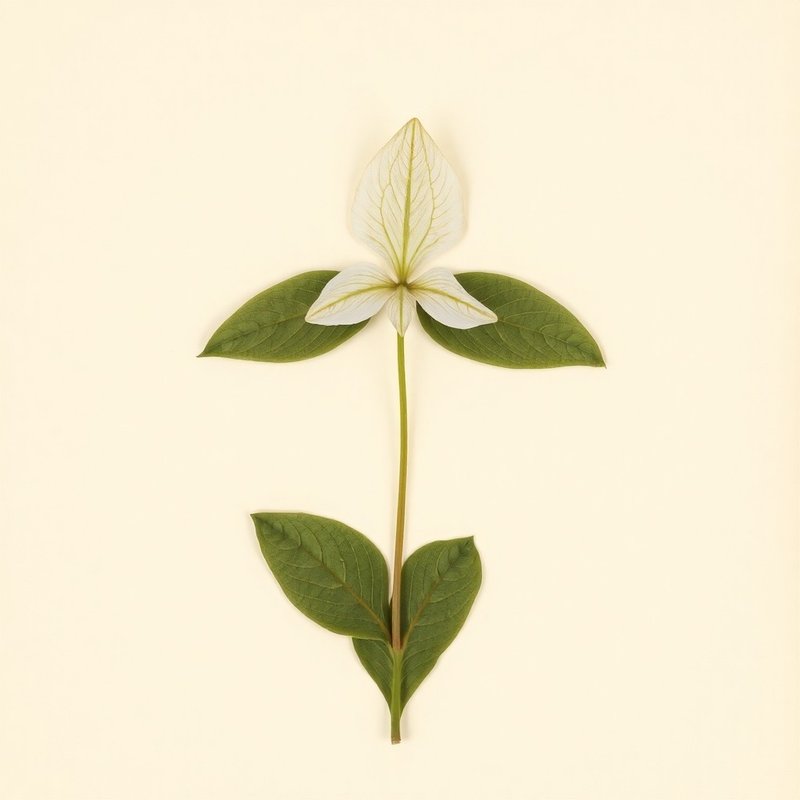
Painted Trillium (Trillium undulatum) is a perennial herb native to eastern North America, found in habitats ranging from Connecticut and Georgia to Maine and Ontario. This plant thrives in moist environments with partial sun to full shade and is known for its ornamental value and medicinal properties. Its distinctive features include light pink or white petals with purple markings and deeply divided leaves that grow close to the ground. The edible parts are the leaves, which can be used in various culinary applications; however, they are often prepared by boiling to soften them before eating, as the raw version may be tough and bitter. P. undulatum is adaptable to a variety of soil types, including light (sandy), medium, and heavy (clay) soils, making it a versatile addition to gardens and natural landscapes. It is hardy in zones 4-8 and can be propagated through division or seed sowing. For best results, plant it in a location with adequate moisture and dappled sunlight. This perennial grows up to 0.2 meters tall and is ideal for gardeners interested in edible landscaping. While the plant has medicinal properties, it is important to use caution and seek professional guidance before incorporating it into any treatment regimen.
What is Painted Trillium?
Painted Trillium (Trillium undulatum) is a perennial herb native to eastern North America, found in habitats ranging from Connecticut and Georgia to Maine and Ontario. This plant thrives in moist environments with partial sun to full shade and is known for its ornamental value and medicinal properties.
IV·bMixology suggestions
1 draft
Mixology suggestions
1 draftVCultivation
Cultivation
How to grow Painted Trillium for the first time
Start with planting Painted Trillium in a shady spot and provide moist, well-draining soil for your first gardening experience.
- 1
What you'll need
Painted Trillium bulbs or divisions, potting mix, mulch.
- 2
Best time to plant
Plant in early spring before new growth starts or in fall after leaves drop.
- 3
Soil and container prep
Use a well-draining soil mix with some organic matter. Ensure containers have drainage holes.
- 4
Sowing or transplanting
Plant bulbs 5-7 cm deep, spacing them about 10-20 cm apart. For divisions, plant each division individually.
- 5
First two weeks
Keep the soil moist but not waterlogged. Avoid direct sunlight during this period.
- 6
Ongoing care
Provide partial shade and keep the soil consistently moist. Fertilize sparingly with a balanced, slow-release fertilizer.
- 7
Harvest or pruning
Prune dead leaves in late winter to early spring before new growth emerges.
- 8
Common mistakes
Planting in full sun, overwatering, using heavy fertilizers, neglecting mulch, and not providing enough shade.
VIEdible & utility
Edible & utility
VIIDistribution
25 native · 0 introduced
Distribution
25 native · 0 introducedIXSpecimen gallery
1 image
Specimen gallery
1 imageExplore further
About this entry
- Last updated
- Citation
- How to cite this entry · Submit a correction
Continue reading
Get archive updates
Occasional email when substantial new content lands — plant profiles, seasonal growing notes, folk-remedy additions. Free, no tracking, unsubscribe anytime.