
Broadleaf Cumbungi
IOverview
Overview
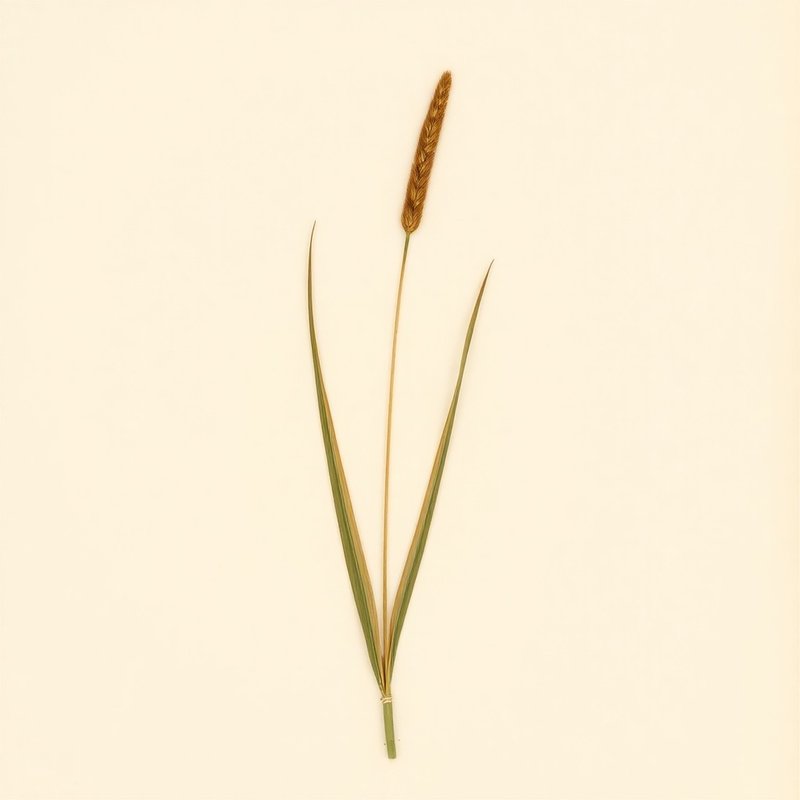
Broadleaf Cumbungi (Typha orientalis) is a fast-growing perennial in the cattail family, Typhaceae. It grows as a tall waterside plant, reaching up to 3 metres, and is adapted to full sun and consistently wet or waterlogged ground. It tolerates light sandy, medium, and heavy clay soils, though it is not drought resistant. Its natural range is broad, spanning much of East Asia, including China, Japan, Korea, Manchuria, Mongolia, and the Philippines, as well as parts of Southeast Asia and large areas of Australia and New Zealand. It also occurs on islands such as Taiwan, Sakhalin, Norfolk Island, and the Kermadec Islands, and has been introduced to the Chatham Islands. In these settings it typically grows in marshes, along river and lake margins, and in other shallow freshwater habitats. The plant is edible across its native range, with the flowers, leaves, pollen, roots, seeds, shoots, and stems all used. These parts are reportedly eaten raw or cooked, often boiled or steamed to improve texture and flavour. Beyond food, broadleaf cumbungi is valued for fibre and weaving material, and its fast growth and dense stands make it useful for biomass and erosion control along wet banks. Because it can resemble other cattails and grows in wet environments, anyone considering harvesting it should identify it with certainty and gather from clean water, as wild aquatic plants can accumulate contaminants.
What is Broadleaf Cumbungi?
Broadleaf Cumbungi (Typha orientalis) is a fast-growing perennial in the cattail family, Typhaceae. It grows as a tall waterside plant, reaching up to 3 metres, and is adapted to full sun and consistently wet or waterlogged ground.
VCultivation
Cultivation
How to grow Broadleaf Cumbungi for the first time
Start with Broadleaf Cumbungi by ensuring you have the right conditions and care routine.
- 1
What you'll need
A container or garden bed, seeds or young plants.
- 2
Best time to plant
Plant in spring when temperatures are mild.
- 3
Soil and container prep
Use a mix of light sandy soil, medium soil, and heavy clay. Ensure good drainage.
- 4
Sowing or transplanting
Direct sow seeds in the prepared soil or transplant young plants into moist areas.
- 5
First two weeks
Keep the soil consistently wet and monitor for signs of stress.
- 6
Ongoing care
Provide full sun, keep the area moist, and prune dead foliage regularly.
- 7
Harvest or pruning
Prune dead leaves to maintain appearance. Harvest shoots and stems as needed.
- 8
Common mistakes
Overwatering, planting in poorly drained soil, neglecting to provide full sun.
VIEdible & utility
Edible & utility
VIIDistribution
24 native · 1 introduced
Distribution
24 native · 1 introducedIXSpecimen gallery
1 image
Specimen gallery
1 imageExplore further
About this entry
- Last updated
- Citation
- How to cite this entry · Submit a correction
Continue reading
Get archive updates
Occasional email when substantial new content lands — plant profiles, seasonal growing notes, folk-remedy additions. Free, no tracking, unsubscribe anytime.