
Prickly Blackcurrant
Ribes lacustre
Educational content — not medical, botanical, or professional advice. Plant identification, safety, and edibility depend on local conditions, cultivars, and correct identification. Consult a qualified botanist or forager before consuming or handling wild specimens. How we source & review →
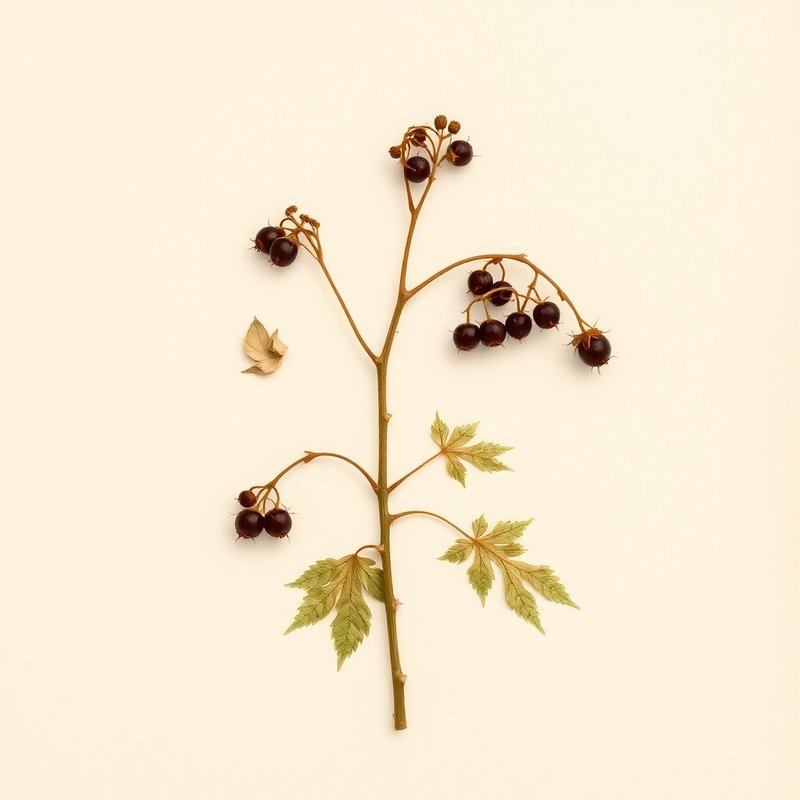
Pl. 5492 — Ribes lacustre
Ribes lacustreRibes lacustreRibes lacustreRibes lacustreRibes lacustreRibes lacustreRibes lacustreRibes lacustreRibes lacustreRibes lacustreRibes lacustreRibes lacustreRibes lacustreRibes lacustre
IOverview
Overview
Prickly Blackcurrant (Ribes lacustre) is a shrub native to the northern regions of North America, including Alaska, Alberta, British Columbia, and parts of Canada such as Quebec and Ontario. It thrives in moist environments with light to partial shade, making it adaptable to various landscapes. Known for its edible fruit, this plant can be found growing up to 1.5 meters tall in soils that are light (sandy), medium, or heavy (clay). Its preference for a pH range of 5 to 7.8 ensures it can grow well in a variety of conditions. One distinctive feature is its prickly nature, which helps protect the plant from browsing animals while adding an ornamental element to gardens.
Quick answers
What is Prickly Blackcurrant?
Prickly Blackcurrant (Ribes lacustre) is a shrub native to the northern regions of North America, including Alaska, Alberta, British Columbia, and parts of Canada such as Quebec and Ontario. It thrives in moist environments with light to partial shade, making it adaptable to various landscapes.
Growingconditions · propagation · uses
VCultivation
Cultivation
Prickly Blackcurrant thrives in full to partial sun and prefers moist, well-drained soils that are light (sandy), medium, or heavy (clay). It is hardy in zones 4-8 and can grow up to 1.5 meters tall. As a shrub, it requires regular watering but can tolerate some drought once established. Propagate through seed or softwood cuttings. The fruit, which is edible, ripens well in temperate regions. Maintain soil pH between 5 and 7.8 for optimal growth.
Light
Full sun, Partial sun/shade
Water
Moist
Soil
Light (sandy), Medium, Heavy (clay)
Hardiness
4-8
Habit
Shrub
Mature size
1.5 m tall
Soil pH
5–7.8
For first-time growers
How to grow Prickly Blackcurrant for the first time
7steps
Start with a simple, low-maintenance shrub that thrives in various conditions.
- 1
What you'll need
Prickly Blackcurrant plants or seeds, garden gloves, trowel.
- 2
Best time to plant
Plant in early spring or late fall when the soil is moist and cool.
- 3
Soil and container prep
Ensure the soil is well-draining with a pH between 5 and 7.8; loosen the topsoil if planting in containers.
- 4
Sowing or transplanting
Transplant young plants from nursery pots directly into the garden, spacing them about 1 meter apart.
- 5
First two weeks
Water regularly to keep the soil moist but not waterlogged; mulch around the base for added moisture retention.
- 6
Ongoing care
Prune in late winter or early spring to remove dead or weak branches, and fertilize once a year with compost.
- 7
Harvest or pruning
Wait until summer when the fruit is ripe; prune annually after harvesting to maintain plant health.
VIEdible & utility
Edible & utility
Edible parts:Fruit
Edible uses: The Prickly Blackcurrant's fruit can be eaten raw or used in various preparations. Typically, the fruit is harvested when ripe and enjoyed fresh, but it can also be cooked into jams, jellies, or sauces. The berries have a tart flavor that makes them suitable for both sweet and savory dishes.
Other uses:CraftingWeaving material
Contextrange · companions · related
VIIDistribution
30 native · 0 introduced
Distribution
30 native · 0 introducedDistribution across1 continent· 30 native
Americas1 region
native (1)United States
Broader regions
native:Alberta, British Columbia, California, Colorado, Connecticut, Idaho, Indiana, Labrador, Maine, Manitoba, Michigan, Minnesota, Montana, Nevada, New Brunswick, New Hampshire, Massachusetts, New Jersey, New Mexico, Newfoundland, Nova Scotia, Ontario, Oregon, Pennsylvania, Prince Edward I., Québec, Rhode I., Saskatchewan, South Dakota
IXSpecimen gallery
1 image
Specimen gallery
1 imageXI
Explore further
Companion planting
Growing zone
XII
About this entry
- Last updated
- Citation
- How to cite this entry · Submit a correction
Back to the cataloguePlant id · 54920586-40c4-4e11-8338-8f1b5cefda0b
Decision aid
Choosing between Prickly Blackcurrant and something else?
Continue reading
❦❦❦❦
Endpaper · archive updates
Get archive updates
Occasional email when substantial new content lands — plant profiles, seasonal growing notes, folk-remedy additions. Free, no tracking, unsubscribe anytime.