Skip to content
IIIFolio · plant profile№ C4C6edible
Data provenancePermapeopleTrefleWikipediaPFAFPOWOreviewed 15 Oct 2026methodology → read
Home/Plants/Malvaceae

Hollyhock

Alcea roseafam. Malvaceae
Educational content — not medical, botanical, or professional advice. Plant identification, safety, and edibility depend on local conditions, cultivars, and correct identification. Consult a qualified botanist or forager before consuming or handling wild specimens. How we source & review →
Updated·Quick Q&A →
Garden journal pausedUse profile notes below
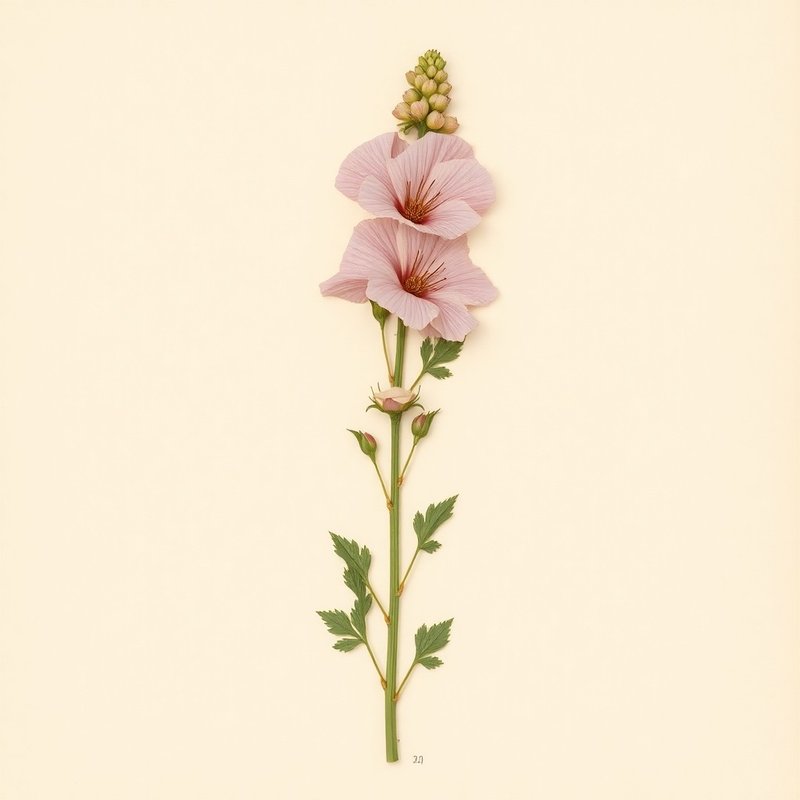
Alcea rosea (Hollyhock) — botanical photograph
Pl. C4C6 — Alcea rosea
Alcea roseaAlcea roseaAlcea roseaAlcea roseaAlcea roseaAlcea roseaAlcea roseaAlcea roseaAlcea roseaAlcea roseaAlcea roseaAlcea roseaAlcea roseaAlcea rosea
I

Overview

Hollyhock (Alcea rosea) is a striking perennial native to Turkey, known for its tall stature and showy flowers. This plant thrives in full sun with a preference for dry to moist soil types, including light sandy, medium, and heavy clay soils. Hardy from zones 5-9, hollyhocks can grow up to 2.4 meters tall, making them a significant presence in any garden. The plant is versatile, with edible parts including its flowers, leaves, roots, and stems, which can be used in culinary dishes. Its distinctive feature is the large, colorful blooms that appear in summer, often in shades of pink, red, and white, adding ornamental value to any landscape. Hollyhocks are also useful for compost, dye, litmus, oil, and textiles, making them a valuable addition to gardens beyond their aesthetic appeal. While the plant is not medicinal, it is important to handle it with care, especially when harvesting, as some parts may contain compounds that could be irritating.

Quick answers

What is Hollyhock?

Hollyhock (Alcea rosea) is a striking perennial native to Turkey, known for its tall stature and showy flowers. This plant thrives in full sun with a preference for dry to moist soil types, including light sandy, medium, and heavy clay soils.

Compare with:Abelmoschus esculentus→Abutilon purpurascens→Aibika→all comparisons →
Growingconditions · propagation · uses
V

Cultivation

Hollyhock thrives in full sun and prefers well-drained soil that can be light (sandy), medium, or heavy (clay). It is hardy in zones 5-9 and can grow up to 2.4 meters tall. Hollyhock requires moderate watering, and it is drought-tolerant once established. Propagation can be done through seeds or by dividing the roots in the spring. The plant is perennial and is native to Turkey, making it suitable for temperate regions. Its edible parts include flowers, leaves, roots, and stems.
Light
Full sun
Water
Dry, Moist
Soil
Light (sandy), Medium, Heavy (clay)
Hardiness
5-9
Life cycle
Perennial
Mature size
2.4 m tall
For first-time growers

How to grow Hollyhock for the first time

8steps

Start with easy-to-grow Hollyhocks for a rewarding beginner gardening experience.

  1. 1

    What you'll need

    Seeds or young plants, planting pot, garden soil.

  2. 2

    Best time to plant

    Plant in spring after the last frost or start seeds indoors 6-8 weeks before the last frost.

  3. 3

    Soil and container prep

    Use well-draining soil. For containers, choose a pot at least 30 cm wide with drainage holes.

  4. 4

    Sowing or transplanting

    Direct sow seeds in the garden after danger of frost is past. Transplant young plants if needed.

  5. 5

    First two weeks

    Water regularly to keep soil moist until established, then reduce watering.

  6. 6

    Ongoing care

    Provide full sun and regular watering during dry spells. Deadhead flowers for continuous bloom.

  7. 7

    Harvest or pruning

    Prune dead leaves and spent blooms to maintain plant health and appearance.

  8. 8

    Common mistakes

    Overwatering, planting in heavy soil, neglecting to prune.

VI

Edible & utility

Edible parts:FlowersLeavesRootStem
Edible uses: Oil, Tea
Other uses:CompostDyeLitmusoiltextiles
Contextrange · companions · related
VII

Distribution

1 native · 108 introduced
Distribution across4 continents· 1 native· 108 introduced
Europe16 regions
introduced (16)AlbaniaAustriaBulgariaCyprusFranceGermanyGreeceHungaryItalyPortugalRomaniaRussiaSpainSwitzerlandUkraineUnited Kingdom
Asia13 regions
native (1)Turkey
introduced (12)BangladeshChinaGeorgiaIndiaLaosNepalOmanPakistanSouth KoreaTurkmenistanUzbekistanVietnam
Americas8 regions
introduced (8)CubaDominican RepublicEcuadorEl SalvadorGuatemalaHaitiPuerto RicoVenezuela
Africa5 regions
introduced (5)AlgeriaEgyptLibyaMoroccoTunisia
Broader regions
introduced:Alabama, Argentina Northwest, Arizona, California, Colorado, Connecticut, Czechoslovakia, Delaware, District of Columbia, East Aegean Is., Idaho, Illinois, Indiana, Iowa, Juan Fernández Is., Kansas, Kentucky, Kriti, Leeward Is., Maryland, Masachusettes, Massachusetts, Michigan, Minnesota, Mississippi, Missouri, Montana, Nebraska, Nevada, New Brunswick, New Jersey, New Mexico, New York, New Zealand South, North Carolina, North Dakota, Ohio, Ontario, Oregon, Pennsylvania, Québec, Rhode I., South Dakota, Tadzhikistan, Tennessee, Texas, Trinidad-Tobago, Utah, Vermont, Virginia, Washington, West Himalaya, West Virginia, Windward Is., Wisconsin, Wyoming, Yugoslavia
IX

Specimen gallery

1 image
Alcea rosea (Hollyhock) — botanical photograph
Hollyhock (Alcea rosea)
X

See also

8 related
XI

Explore further

XII

About this entry

Last updated
Citation
How to cite this entry · Submit a correction
Back to the cataloguePlant id · c4c6bc9c-d80c-4eb6-a487-cff5ad99843a
Decision aid
Choosing between Hollyhock and something else?
Compare with another plant

Continue reading

❦❦❦❦
Endpaper · archive updates

Get archive updates

Occasional email when substantial new content lands — plant profiles, seasonal growing notes, folk-remedy additions. Free, no tracking, unsubscribe anytime.

Newsletter returning soon.
We are rebuilding the update list around a lightweight editorial workflow. New dispatches will resume after the next content review cycle.
iCare notes