
Damson
Prunus insititia
Educational content — not medical, botanical, or professional advice. Always consult a qualified clinician before using any herbal preparation — especially during pregnancy, breastfeeding, while on medication, or for children. How we source & review →
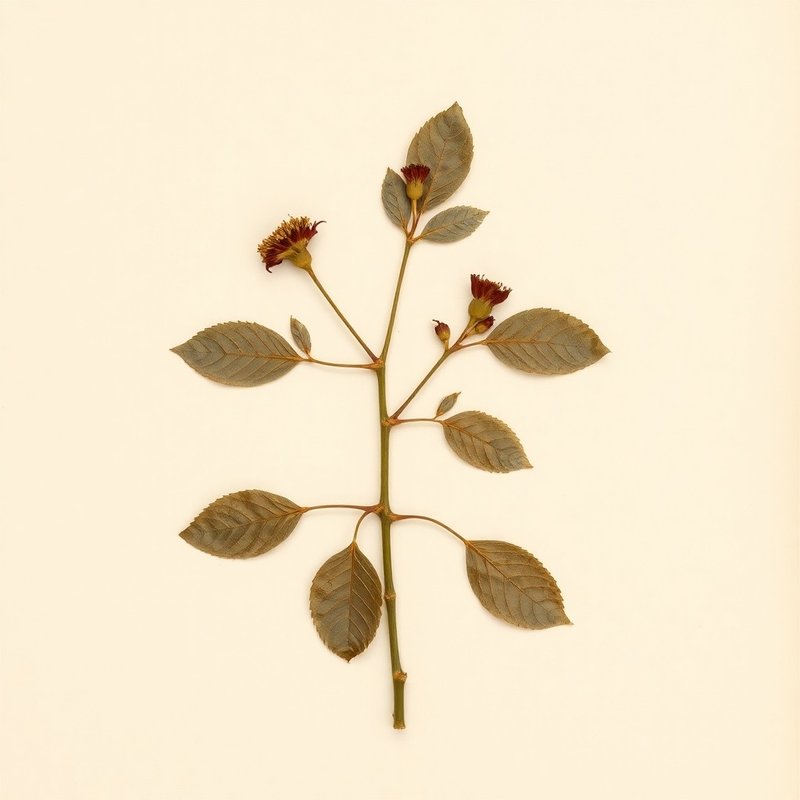
Pl. 0645 — Prunus insititia
Prunus insititiaPrunus insititiaPrunus insititiaPrunus insititiaPrunus insititiaPrunus insititiaPrunus insititiaPrunus insititiaPrunus insititiaPrunus insititiaPrunus insititiaPrunus insititiaPrunus insititiaPrunus insititia
IOverview
Overview
Damson, scientifically known as Prunus insititia, is a deciduous shrub or small tree native to the mountainous regions of Austria, Germany, and Switzerland. This member of the Rosaceae family thrives in moist, well-drained soils that are light (sandy), medium, or heavy (clay) and prefers full sun to partial shade. Known for its edible fruit, which is often used in jams and preserves, Damson also has a history of medicinal use documented by herbalists. One distinctive feature sets it apart: it can grow up to 6 meters tall, making it an ornamental addition to gardens while also providing valuable resources through its fruit and seeds.
Quick answers
What is Damson?
Damson, scientifically known as Prunus insititia, is a deciduous shrub or small tree native to the mountainous regions of Austria, Germany, and Switzerland. This member of the Rosaceae family thrives in moist, well-drained soils that are light (sandy), medium, or heavy (clay) and prefers full sun to partial shade.
What is Damson used for?
Traditionally used for digestion, immune support. Each claim is evidence-rated — see Section II for full citations.
Best for
Top 2 evidence-ranked uses of Damson
Clinicaluses · safety · chemistry · dosagemedicinal profile
IIBenefits & evidence
2 claims · 0 sources
Benefits & evidence
2 claims · 0 sources- Damson has been traditionally used in European herbal medicine to support digestive health, often consumed as a fruit or made into jams and preserves. Its high fiber content may help regulate bowel movements.
The fiber in damsons supports gut motility by adding bulk to the stool and promoting regularity. However, specific compounds responsible for this effect are not fully characterised.
- Damson fruits have been traditionally used in European herbal medicine to support the immune system, particularly during seasonal changes. The fruit's vitamin C content may contribute to this benefit.
Vitamin C acts as an antioxidant and supports immune function by enhancing white blood cell activity. However, specific mechanisms for damson fruits are not fully characterised.
IV·bMixology suggestions
1 draft
Mixology suggestions
1 draftEditorial drafts. These pairings are AI-suggested from traditional herbal lore. Always verify with a qualified herbalist before brewing.
Damson support blend
generaltea
AI returned a direct ingredient list; normalized into one draft blend for editorial review.
Growingconditions · propagation · uses
VCultivation
Cultivation
Damson thrives in full sun to partial shade and requires moist soil that can be light (sandy), medium, or heavy (clay). It is hardy in zones 5-9, making it suitable for temperate regions. For optimal growth, maintain consistent moisture levels. Propagate through seeds or by grafting. The plant grows up to 6 meters tall and produces edible fruit and seeds.
Light
Full sun, Partial sun/shade
Water
Moist
Soil
Light (sandy), Medium, Heavy (clay)
Hardiness
5-9
Life cycle
Perennial
Mature size
6.0 m tall
For first-time growers
How to grow Damson for the first time
8steps
Start with a simple damson tree to gain experience in growing stone fruits.
- 1
What you'll need
A young damson sapling, garden gloves, and a trowel.
- 2
Best time to plant
Plant in early spring or late autumn when the soil is workable but not frozen.
- 3
Soil and container prep
Ensure the soil is well-draining with a pH between 6.0 and 7.5; amend as needed.
- 4
Sowing or transplanting
Transplant the sapling into a prepared hole that's twice as wide but not deeper than its root ball.
- 5
First two weeks
Water regularly to keep the soil moist, and mulch around the base to retain moisture.
- 6
Ongoing care
Provide full sun or partial shade; water deeply once a week during dry spells. Prune in late winter to maintain shape.
- 7
Harvest or pruning
Prune annually in late winter to encourage fruiting and remove dead branches.
- 8
Common mistakes
Overwatering, planting too deep, neglecting regular pruning, not providing enough sunlight, and using the wrong soil type.
VIEdible & utility
Edible & utility
Edible parts:FruitSeed
Edible uses: The damson fruit is edible and can be eaten raw or cooked. It is often used to make jams, jellies, and preserves due to its tart flavor. The seeds are also edible but should be consumed in small quantities as they contain cyanogenic glycosides. Skip the preparation details for this note.
Other uses:DyeHedgerowWind breaker
Contextrange · companions · related
VIIDistribution
3 native · 24 introduced
Distribution
3 native · 24 introducedDistribution across2 continents· 3 native· 24 introduced
Europe16 regions
native (3)AustriaGermanySwitzerland
introduced (13)AlbaniaBelgiumBulgariaFranceHungaryIrelandNorwayRomaniaRussiaSpainSwedenUkraineUnited Kingdom
Africa3 regions
introduced (3)AlgeriaMoroccoTunisia
Broader regions
introduced:New South Wales, Tasmania, Vermont, Argentina Northeast, Yugoslavia, Czechoslovakia, Baltic States
VIIIGarden companions
8 pairs
Garden companions
8 pairsPlant near these
These plants help — by repelling pests, fixing nitrogen, attracting pollinators, or sharing space well.
Plymouth Pear
Pyrus cordata
Pollinator-friendly
Attracts pollinators that also benefit Plymouth Pear.
✶ AI suggested
Desert Peach
Prunus andersonii
Pollinator-friendly
Prunus insititia attracts pollinators which can benefit Desert Peach.
✶ AI suggested
Baw-Baw Berry
Wittsteinia vacciniacea
Pest repellent
Damson repels pests that may harm Baw-Baw Berry.
✶ AI suggested
Dusky pear
Pyrus phaeocarpa
Pollinator-friendly
Damson attracts pollinators which can benefit Dusky pear.
✶ AI suggested
Vitis romanetii
Vitis romanetii
Pest repellent
Damson repels pests that might harm Vitis romanetii.
✶ AI suggested
Mongolian Cherry
Prunus fruticosa
Pollinator-friendly
Both Mongolian Cherry and Damson attract beneficial pollinators.
✶ AI suggested
Manchurian apricot
Prunus armeniaca mandschurica
Pollinator-friendly
Both Manchurian apricot and Damson attract beneficial pollinators.
✶ AI suggested
Spiny Vitis
Vitis davidii
Pest repellent
Damson repels pests that might otherwise harm Spiny Vitis.
✶ AI suggested
IXSpecimen gallery
1 image
Specimen gallery
1 imageXSee also
8 related
See also
8 relatedPlants you might compare or use together — scored by shared family, common use cases, and growing requirements.
shared use cases
Different families, similar therapeutic role — good for comparing.

XI
Explore further
Companion planting
Compare with similar plants
Growing zone
XII
About this entry
- Last updated
- Citation
- How to cite this entry · Submit a correction
Back to the cataloguePlant id · 06452fb8-0dc0-4e56-874f-66e54c423056
Decision aid
Choosing between Damson and something else?
Continue reading
❦❦❦❦
Endpaper · archive updates
Get archive updates
Occasional email when substantial new content lands — plant profiles, seasonal growing notes, folk-remedy additions. Free, no tracking, unsubscribe anytime.