
Sweet Violet
Viola odoratafam. Violaceae
Educational content — not medical, botanical, or professional advice. Always consult a qualified clinician before using any herbal preparation — especially during pregnancy, breastfeeding, while on medication, or for children. How we source & review →
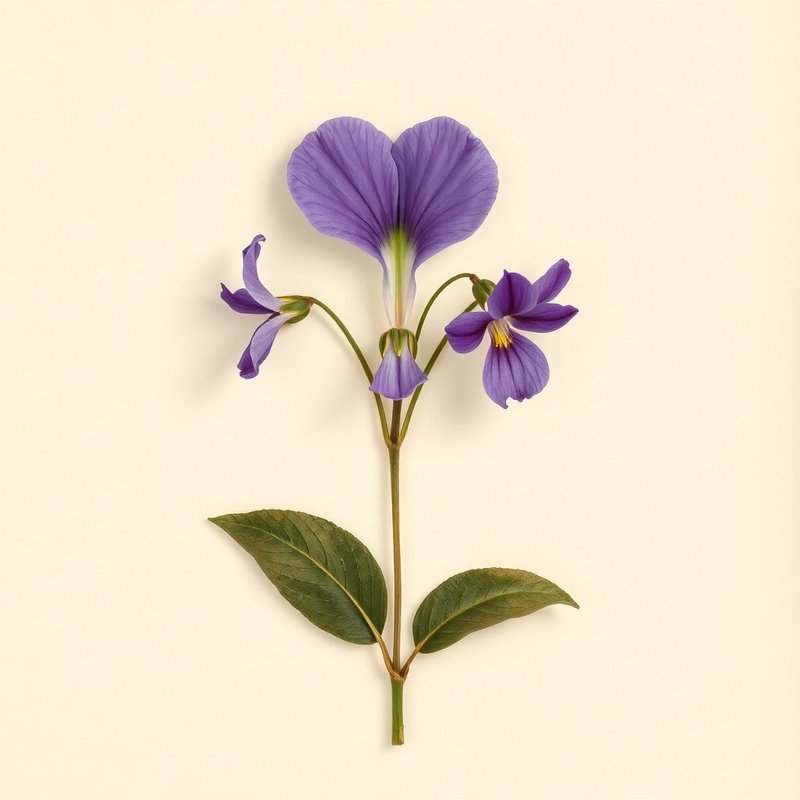
Pl. A9B3 — Viola odorata
Viola odorataViola odorataViola odorataViola odorataViola odorataViola odorataViola odorataViola odorataViola odorataViola odorataViola odorataViola odorataViola odorataViola odorata
IOverview
Overview
Sweet Violet (Viola odorata) belongs to the Violaceae family and is a perennial plant known for its light, fragrant flowers that often bloom in early spring. Native to regions including Ireland, Albania, Algeria, and Italy, this species thrives in moist, well-drained soil and can tolerate partial sun to full shade. Its edible parts—both leaves and flowers—are used for culinary purposes and traditional medicine. Sweet Violet is also valued for its ornamental qualities, adding a touch of elegance to gardens with its delicate purple or white blossoms. One distinctive feature is its strong, sweet scent, which is why it's often cultivated not just for its beauty but also for its fragrance in perfumes and potpourris.
Quick answers
What is Sweet Violet?
Sweet Violet (Viola odorata) belongs to the Violaceae family and is a perennial plant known for its light, fragrant flowers that often bloom in early spring. Native to regions including Ireland, Albania, Algeria, and Italy, this species thrives in moist, well-drained soil and can tolerate partial sun to full shade.
IV·bMixology suggestions
2 drafts
Mixology suggestions
2 draftsEditorial drafts. These pairings are AI-suggested from traditional herbal lore. Always verify with a qualified herbalist before brewing.
Spring Elixir
immunetincture
Used traditionally to support the immune system.
Gentle Focus
focustea
Historically used to aid concentration and mental clarity.
Growingconditions · propagation · uses
VCultivation
Cultivation
Sweet Violet prefers full to partial sun and requires moist soil that can be light (sandy), medium, or heavy (clay). It is hardy in zones 4-8 and grows as a perennial, reaching heights of about 10 cm. Propagate via division or seed. Ensure the soil remains consistently moist for best growth.
Light
Full sun, Partial sun/shade
Water
Moist
Soil
Light (sandy), Medium, Heavy (clay)
Hardiness
4-8
Life cycle
Perennial
Mature size
0.1 m tall
For first-time growers
How to grow Sweet Violet for the first time
8steps
Sweet Violets are a low-maintenance perennial that can be easily grown by beginners.
- 1
What you'll need
Seeds or small plants, potting soil, containers or garden bed.
- 2
Best time to plant
Plant in early spring or late autumn for best results.
- 3
Soil and container prep
Use well-draining soil with a pH between 6.0 and 7.5, ensuring the container has drainage holes.
- 4
Sowing or transplanting
Direct sow seeds in the garden bed or start them indoors and transplant once they have grown their first set of true leaves.
- 5
First two weeks
Keep soil consistently moist, providing partial shade to avoid wilting.
- 6
Ongoing care
Water when the top inch of soil is dry. Mulch around plants to retain moisture and suppress weeds.
- 7
Harvest or pruning
Prune dead flowers to encourage more blooms, and remove any yellowing leaves to keep the plant healthy.
- 8
Common mistakes
Overwatering, planting in heavy soil without drainage, ignoring pests like aphids, not providing enough light, and neglecting to mulch.
VIEdible & utility
Edible & utility
Edible parts:FlowersLeaves
Edible uses: Condiment, Tea
Other uses:Essential OilLitmusDynamic accumulatorGround coverFragrance
Contextrange · companions · related
VIIDistribution
30 native · 0 introduced
Distribution
30 native · 0 introducedDistribution across3 continents· 30 native
Europe17 regions
native (17)AustriaBelarusBelgiumBulgariaCyprusFranceGermanyGreeceHungaryIrelandItalyNetherlandsPortugalRussiaSpainUkraineUnited Kingdom
Asia3 regions
native (3)IranIraqKazakhstan
Africa2 regions
native (2)AlgeriaMorocco
Broader regions
native:Kriti, Baltic States, Czechoslovakia, East Aegean Is.
VIIIGarden companions
1 pair
Garden companions
1 pairPlant near these
These plants help — by repelling pests, fixing nitrogen, attracting pollinators, or sharing space well.
XSee also
8 related
See also
8 relatedPlants you might compare or use together — scored by shared family (Violaceae), common use cases, and growing requirements.
same family · Violaceae
Botanical relatives — often share phytochemistry + growing needs.
XI
Explore further
Companion planting
Compare with similar plants
Growing zone
XII
About this entry
- Last updated
- Citation
- How to cite this entry · Submit a correction
Back to the cataloguePlant id · a9b31032-19a8-42f2-945c-2df87a403802
Decision aid
Choosing between Sweet Violet and something else?
Continue reading
❦❦❦❦
Endpaper · archive updates
Get archive updates
Occasional email when substantial new content lands — plant profiles, seasonal growing notes, folk-remedy additions. Free, no tracking, unsubscribe anytime.