
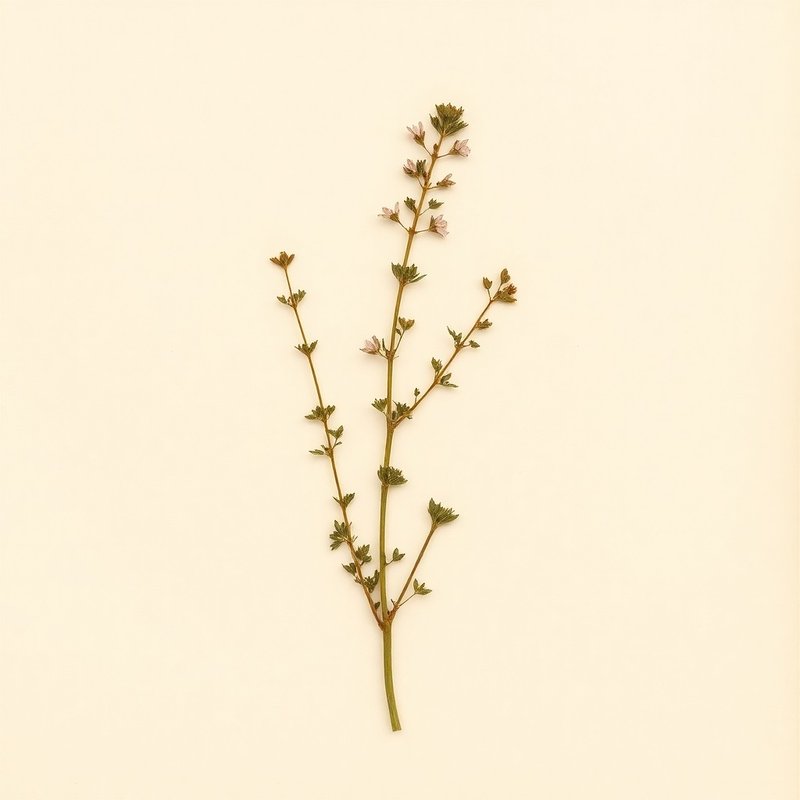
Wild CabbageBrassica oleracearepels pests
Thyme deters cabbage worms.
Thymus vulgaris
Thyme grows best when paired with plants that repels pests, attracts pollinators, covers the ground. We've catalogued 4 beneficial companions Every pairing below cites its mechanism — pest deterrence, nitrogen fixing, allelopathy, or shared disease.
Want the full profile? See Thyme botanical profile →
Thyme deters cabbage worms.
Flowering herbs draw bees, hoverflies, and parasitic wasps — improving fruit set and biological pest control.
Sage and thyme share dry, sunny conditions and aromatic pest-confusing foliage.
Thyme and oregano form a low aromatic ground layer in dry beds.
Strong aromatics like basil, garlic, and marigold mask the olfactory cues that pests use to find their target crop.
Flowering herbs draw bees, hoverflies, and parasitic wasps — improving fruit set and biological pest control.
Low spreading plants suppress weeds, retain soil moisture, and shade out invaders.
The top companions are Wild Cabbage, Lavender, Sage. 1 more pairings are catalogued above with their mechanisms.
Aromatic companions deter many pests through scent masking and alarm pheromones. Effect varies by pest species and density — most effective as part of a polyculture, not a one-plant solution.
Some mechanisms are well-documented (legume nitrogen fixation, allelopathy in walnut and fennel, nematode suppression by marigolds). Others are traditional pairings with anecdotal support. We cite both, but mark mechanism strength where available.
Plants in the same botanical family — often share cultivation needs and pest sensitivities.
Occasional email when substantial new content lands — plant profiles, seasonal growing notes, folk-remedy additions. Free, no tracking, unsubscribe anytime.