
Dark-Winged Orchis
Orchis ustulatafam. Orchidaceae
Educational content — not medical, botanical, or professional advice. Plant identification, safety, and edibility depend on local conditions, cultivars, and correct identification. Consult a qualified botanist or forager before consuming or handling wild specimens. How we source & review →
Garden journal pausedUse profile notes below
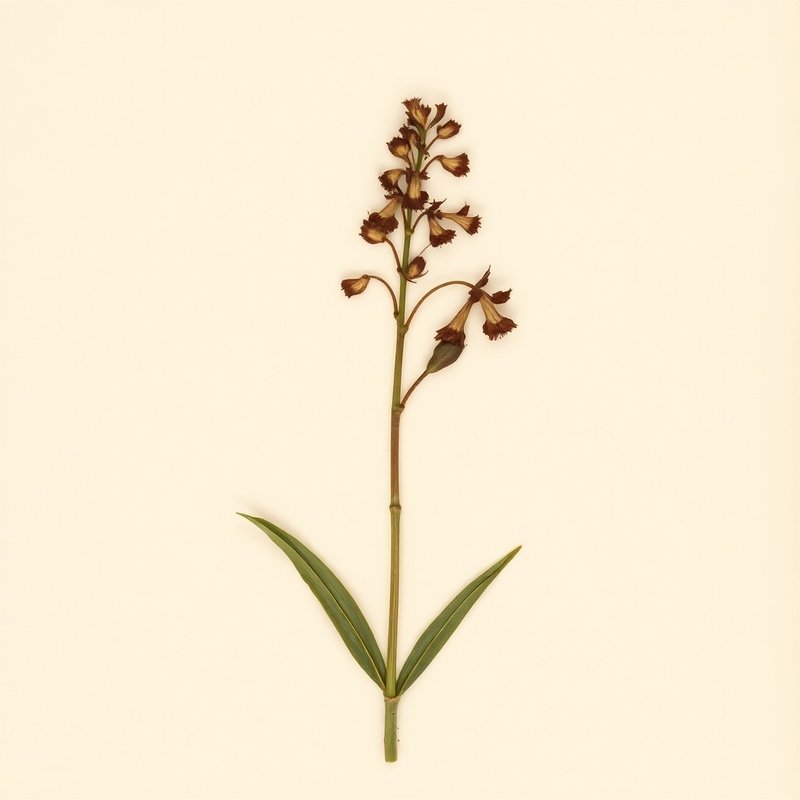
Pl. 5836 — Orchis ustulata
Orchis ustulataOrchis ustulataOrchis ustulataOrchis ustulataOrchis ustulataOrchis ustulataOrchis ustulataOrchis ustulataOrchis ustulataOrchis ustulataOrchis ustulataOrchis ustulataOrchis ustulataOrchis ustulata
IOverview
Overview
Dark-Winged Orchis (Orchis ustulata) belongs to the orchid family, Orchidaceae, and is widely distributed across Europe, from the British Isles to Ukraine and parts of Scandinavia. This plant thrives in moist to wet conditions with light to heavy soil types, making it adaptable but preferring environments where the soil pH ranges between 6.5 and 7. It can be found growing in various European countries such as Albania, Austria, Belarus, Belgium, Bulgaria, and others. The Dark-Winged Orchis is known for its distinctive dark brown or black wings on the lip of the flower, setting it apart from other orchids in the region. Its edible root, which is native to many parts of Europe including Albania, Austria, Belarus, Belgium, Bulgaria, and more, can be harvested but should only be done after proper identification to avoid confusion with potentially harmful species. This plant grows between 0.2 meters and prefers partial shade to full sun, with a light requirement of 7/10. It is hardy in temperate regions, generally growing between zones 4-8. For cultivation, it requires consistently moist soil and well-drained conditions. The root can be used as a drink ingredient, adding a unique flavor to beverages. While the Dark-Winged Orchis is not known for medicinal properties, its edible parts make it valuable in culinary contexts. Cultivators should exercise caution when harvesting, ensuring they correctly identify the plant to avoid any potential risks.
Quick answers
What is Dark-Winged Orchis?
Dark-Winged Orchis (Orchis ustulata) belongs to the orchid family, Orchidaceae, and is widely distributed across Europe, from the British Isles to Ukraine and parts of Scandinavia.
Growingconditions · propagation · uses
VCultivation
Cultivation
Dark-Winged Orchis thrives in moist to wet conditions and prefers light (sandy), medium, or heavy (clay) soils with a pH of 6.5–7. It is hardy in temperate regions, generally growing between zones 4-8. This plant requires partial shade to full sun, with a light requirement of 7/10. For cultivation, keep the soil consistently moist and provide well-drained conditions. The edible root can be harvested, but ensure proper identification before consumption as it is native across Europe.
Light
7/10
Water
Moist, Wet
Soil
Light (sandy), Medium, Heavy (clay)
Hardiness
4-8
Mature size
0.2 m tall
Soil pH
6.5–7
For first-time growers
How to grow Dark-Winged Orchis for the first time
8steps
Start with Dark-Winged Orchis as a simple, low-maintenance project for beginners.
- 1
What you'll need
A small pot, well-draining soil, and the Dark-Winged Orchis plant.
- 2
Best time to plant
Plant in spring or early fall when temperatures are mild.
- 3
Soil and container prep
Use a light, sandy mix with perlite for good drainage. Ensure the pot has holes at the bottom.
- 4
Sowing or transplanting
Transplant young plants into their new pots gently, avoiding damage to roots.
- 5
First two weeks
Keep the soil moist but not waterlogged. Place in a partially shaded area.
- 6
Ongoing care
Water when the top inch of soil feels dry and provide partial shade during hot weather.
- 7
Harvest or pruning
Prune dead leaves to maintain plant health, but avoid cutting into the root system.
- 8
Common mistakes
Overwatering, planting in heavy soil, and exposing to full sun are common pitfalls.
VIEdible & utility
Edible & utility
Edible parts:Root
Edible uses: Drink
Other uses:Fragrance
Contextrange · companions · related
VIIDistribution
30 native · 1 introduced
Distribution
30 native · 1 introducedDistribution across1 continent· 30 native· 1 introduced
Europe21 regions
native (20)AlbaniaAustriaBelarusBelgiumBulgariaDenmarkFranceGermanyGreeceHungaryItalyPolandPortugalRomaniaRussiaSpainSwedenSwitzerlandUkraineUnited Kingdom
introduced (1)Netherlands
Broader regions
native:Baltic States, Czechoslovakia, Transcaucasus, Yugoslavia
IXSpecimen gallery
1 image
Specimen gallery
1 imageXSee also
8 related
See also
8 relatedPlants you might compare or use together — scored by shared family (Orchidaceae), common use cases, and growing requirements.
same family · Orchidaceae
Botanical relatives — often share phytochemistry + growing needs.

XI
Explore further
Companion planting
Compare with similar plants
Growing zone
Native to
XII
About this entry
- Last updated
- Citation
- How to cite this entry · Submit a correction
Back to the cataloguePlant id · 5836f256-2a5e-4430-92b1-19d58670728c
Decision aid
Choosing between Dark-Winged Orchis and something else?
Continue reading
❦❦❦❦
Endpaper · archive updates
Get archive updates
Occasional email when substantial new content lands — plant profiles, seasonal growing notes, folk-remedy additions. Free, no tracking, unsubscribe anytime.
Newsletter returning soon.
We are rebuilding the update list around a lightweight editorial workflow. New dispatches will resume after the next content review cycle.