
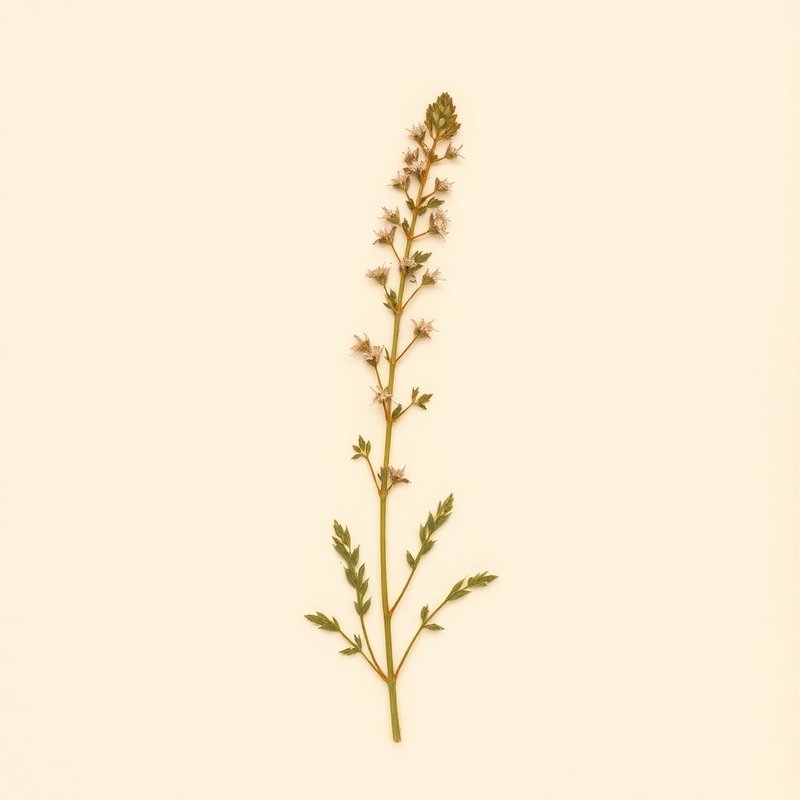
NeemAzadirachta indicarepels pests
Lemon balm deters pests harmful to neem.
Hyssopus officinalis
Hyssop grows best when paired with plants that repels pests, attracts pollinators, lives as mulch. We've catalogued 51 beneficial companions Every pairing below cites its mechanism — pest deterrence, nitrogen fixing, allelopathy, or shared disease.
Want the full profile? See Hyssop botanical profile →
Lemon balm deters pests harmful to neem.
Lemon balm deters pests that might otherwise harm Urtica platyphylla.
Hyssop repels aphids and spider mites.
Hyssop repels pests that might otherwise harm Mace.
Hyssop repels pests that might otherwise harm Dwarf Catnip.
African basil and hyssop repel common garden pests.
Hyssop repels pests that might harm Alecost.
Hyssop deters pests and improves soil health.
Lemon balm deters bean beetles and other pests.
Hyssop acts as a natural pest repellent for the tree.
Hyssop repels pests that might harm Satureja hortensis.
Hyssop repels pests that might harm Artemisia keiskeana.
Hyssop repels pests that might otherwise harm horsemint.
Hyssop deters pests and can improve Salvia sclarea's growth.
Hyssop repels pests that might harm Purple Shiso.
Lemon balm deters pests that might harm Eau De Cologne Mint.
Hyssop repels pests that might harm Florence Fennel.
Hyssop deters insects harmful to Purple Sage.
Mexican Giant Hyssop and Hyssop repel similar pests.
Hyssop helps deter pests and improves hardy marjoram's growth.
Lemon balm deters pests that might harm Long Dan Cao.
Hyssop repels pests that might harm Basil Thyme.
Hyssop repels pests that might harm chamomile.
Hyssop deters insects harmful to Sand Rice.
Hyssop repels insects and can deter pests from Black Caraway.
Hyssop repels aphids and spider mites.
Hyssop is a traditional grape companion and insectary herb.
Hyssop is traditionally planted near grapes as an aromatic pest confuser.
Lower-confidence herb guild pairing: overlapping bloom windows increase beneficial-insect habitat in medicinal herb beds.
Lower-confidence guild pairing: aromatic foliage can confuse pests in dense polyculture beds when spacing and airflow are maintained.
Lower-confidence guild pairing: aromatic foliage can confuse pests in dense polyculture beds when spacing and airflow are maintained.
Lower-confidence guild pairing: aromatic foliage can confuse pests in dense polyculture beds when spacing and airflow are maintained.
Lower-confidence guild pairing: aromatic foliage can confuse pests in dense polyculture beds when spacing and airflow are maintained.
Lower-confidence guild pairing: aromatic foliage can confuse pests in dense polyculture beds when spacing and airflow are maintained.
Lower-confidence guild pairing: aromatic foliage can confuse pests in dense polyculture beds when spacing and airflow are maintained.
Lower-confidence guild pairing: aromatic foliage can confuse pests in dense polyculture beds when spacing and airflow are maintained.
Lower-confidence guild pairing: aromatic foliage can confuse pests in dense polyculture beds when spacing and airflow are maintained.
Lower-confidence guild pairing: aromatic foliage can confuse pests in dense polyculture beds when spacing and airflow are maintained.
Lower-confidence guild pairing: aromatic foliage can confuse pests in dense polyculture beds when spacing and airflow are maintained.
Lower-confidence guild pairing: aromatic foliage can confuse pests in dense polyculture beds when spacing and airflow are maintained.
Lower-confidence guild pairing: aromatic foliage can confuse pests in dense polyculture beds when spacing and airflow are maintained.
Lower-confidence guild pairing: aromatic foliage can confuse pests in dense polyculture beds when spacing and airflow are maintained.
Lower-confidence guild pairing: aromatic foliage can confuse pests in dense polyculture beds when spacing and airflow are maintained.
Lower-confidence guild pairing: aromatic foliage can confuse pests in dense polyculture beds when spacing and airflow are maintained.
Lower-confidence guild pairing: aromatic foliage can confuse pests in dense polyculture beds when spacing and airflow are maintained.
Lower-confidence guild pairing: aromatic foliage can confuse pests in dense polyculture beds when spacing and airflow are maintained.
Lower-confidence guild pairing: aromatic foliage can confuse pests in dense polyculture beds when spacing and airflow are maintained.
Lower-confidence guild pairing: aromatic foliage can confuse pests in dense polyculture beds when spacing and airflow are maintained.
Lower-confidence herb guild pairing: overlapping bloom windows increase beneficial-insect habitat in medicinal herb beds.
Lower-confidence herb guild pairing: overlapping bloom windows increase beneficial-insect habitat in medicinal herb beds.
Lower-confidence herb guild pairing: low living mulches protect soil around taller perennial herbs when kept from crowding crowns.
Strong aromatics like basil, garlic, and marigold mask the olfactory cues that pests use to find their target crop.
Flowering herbs draw bees, hoverflies, and parasitic wasps — improving fruit set and biological pest control.
A low-growing perennial covers bare soil under taller crops, reducing evaporation and weed pressure.
The top companions are Neem, Urtica platyphylla, Germander Speedwell. 48 more pairings are catalogued above with their mechanisms.
Aromatic companions deter many pests through scent masking and alarm pheromones. Effect varies by pest species and density — most effective as part of a polyculture, not a one-plant solution.
Some mechanisms are well-documented (legume nitrogen fixation, allelopathy in walnut and fennel, nematode suppression by marigolds). Others are traditional pairings with anecdotal support. We cite both, but mark mechanism strength where available.
Plante din aceeași familie botanică — de obicei împart nevoile de cultivare și sensibilitățile la dăunători.
Un email curat pe săptămână — profile noi de plante, note sezoniere de cultivare, adăugiri în arhiva de remedii. Gratuit, fără tracking, dezabonare oricând.