
St John's wort
Hypericum perforatumfam. Hypericaceae
The most rigorously studied herbal antidepressant. Hyperforin is the lead active. Major drug-interaction profile — handle with care.
Educational content — not medical, botanical, or professional advice. Always consult a qualified clinician before using any herbal preparation — especially during pregnancy, breastfeeding, while on medication, or for children. How we source & review →
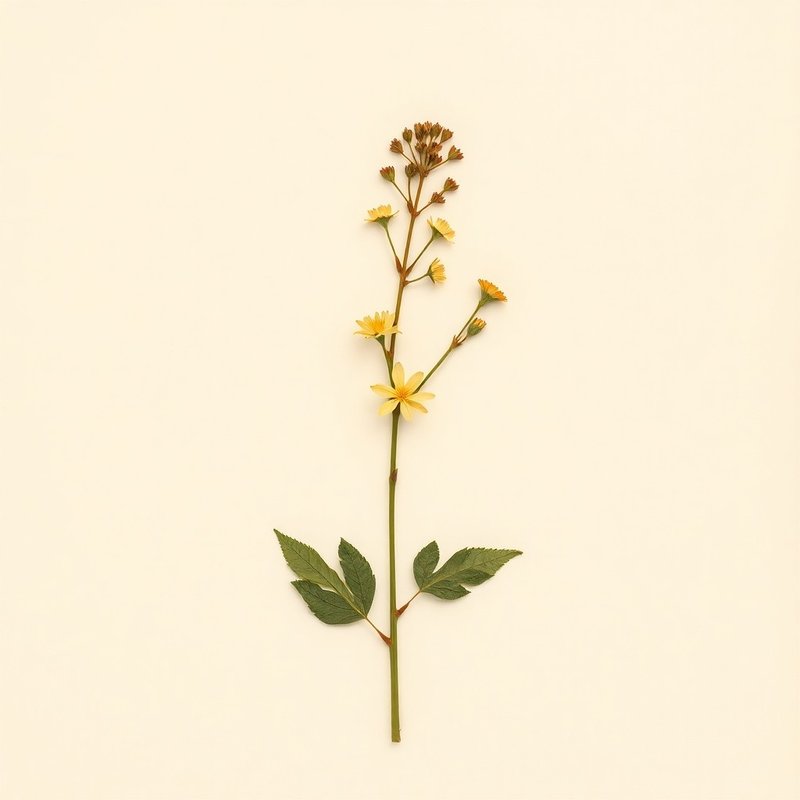
Pl. 3DF2 — Hypericum perforatum
Hypericum perforatumHypericum perforatumHypericum perforatumHypericum perforatumHypericum perforatumHypericum perforatumHypericum perforatumHypericum perforatumHypericum perforatumHypericum perforatumHypericum perforatumHypericum perforatumHypericum perforatumHypericum perforatum
IOverview
Overview
St John's wort (Hypericum perforatum) belongs to the family Hypericaceae and is native to regions including Afghanistan, Albania, Algeria, and parts of Europe such as Austria and the Baltic States. This plant has been naturalized worldwide, often found in its habitat across diverse climates. Known for its medicinal properties, St John's wort is particularly noted for supporting mood and reducing anxiety alongside depression. Its aerial parts and flowers contain beneficial compounds like hyperforin and hypericin, making it a valued herb in traditional medicine. One distinctive feature of this plant is the presence of small oil glands on the leaves and stems, which can be seen as tiny dots when held up to light—a characteristic that gives St John's wort its scientific name "perforatum."
Quick answers
What is St John's wort?
St John's wort (Hypericum perforatum) belongs to the family Hypericaceae and is native to regions including Afghanistan, Albania, Algeria, and parts of Europe such as Austria and the Baltic States. This plant has been naturalized worldwide, often found in its habitat across diverse climates.
What is St John's wort used for?
Traditionally used for mood support, stress & anxiety. Each claim is evidence-rated — see Section II for full citations.
Is St John's wort safe?
5 documented contraindications — review Section III before use. Always consult a clinician for medical conditions, pregnancy, or medication interactions.
Best for
Top 2 evidence-ranked uses of St John's wort
Clinicaluses · safety · chemistry · dosagemedicinal profile
IIBenefits & evidence
2 claims · 2 sources
Benefits & evidence
2 claims · 2 sources- Effective for mild-to-moderate depression
Hyperforin inhibits reuptake of 5-HT, NE, DA. Comparable to SSRIs for mild-moderate MDD per Cochrane.
- Mild reduction in anxiety with depression
Indirect effect via mood improvement.
IICautions & contraindications
5 cautions
Cautions & contraindications
5 cautionsSSRIs / MAOIs
Risk of serotonin syndrome. Do not combine.
oral contraceptives
Induces CYP3A4 → reduced contraceptive efficacy. Backup non-hormonal method required.
warfarin / digoxin / immunosuppressants / antiretrovirals
Reduces plasma levels via CYP3A4 / P-gp induction. Avoid.
pregnancy
Pregnancy / lactation: insufficient data, avoid.
photosensitivity
May cause photosensitivity at high doses.
Need audience-specific safety verdicts? See dogs, cats, children, pregnancy, or breastfeeding guides.
IIIActive compounds
2 listed
Active compounds
2 listedalkaloidterpeneflavonoidglycosidephenolicpolysaccharide
IVDosage
Dosage
| Form | Dose | Frequency | Duration |
|---|---|---|---|
Infusion / tea Mild potency | 2–4 g / 240 ml | 1–3× daily | Up to 42 days |
Tincture (1:5, 45%) Moderate potency | 2–4 ml | 3× daily | Up to 42 days |
Standardized capsule Moderate potency | 300–600 mg | 3× daily | Up to 42 days |
IV·bMixology suggestions
1 draft
Mixology suggestions
1 draftEditorial drafts. These pairings are AI-suggested from traditional herbal lore. Always verify with a qualified herbalist before brewing.
Growingconditions · propagation · uses
VCultivation
Cultivation
St John's wort thrives in full sun to partial shade and prefers well-draining soil. It is hardy in temperate regions but can be grown worldwide where it has naturalized. Water the plant regularly during dry spells, ensuring the soil remains moist but not waterlogged. Propagate through seed or cuttings, as the plant spreads easily by both methods. While hardy, protect young plants from frost to ensure successful growth.
For first-time growers
How to grow St John's wort for the first time
8steps
Start with a simple, low-maintenance approach to growing St John's wort.
- 1
What you'll need
St John's wort seeds or young plants, a small pot or garden bed, and basic gardening tools like a trowel.
- 2
Best time to plant
Plant in spring after the last frost or in early fall for best results.
- 3
Soil and container prep
Use well-draining soil. For containers, choose a pot at least 6 inches deep with drainage holes.
- 4
Sowing or transplanting
Direct sow seeds outdoors after the last frost or start them indoors 4-6 weeks before planting outside. Transplant young plants in spring.
- 5
First two weeks
Water regularly to keep soil moist but not waterlogged. Place in a sunny spot, as St John's wort needs at least 6 hours of direct sunlight daily.
- 6
Ongoing care
Water when the top inch of soil feels dry and mulch around plants to retain moisture. Prune back after flowering to encourage new growth.
- 7
Harvest or pruning
Prune in late spring or early summer to maintain shape and promote bushy growth. Avoid harvesting flowers for medicinal use as it may reduce plant vigor.
- 8
Common mistakes
Overwatering, planting too deep, not providing enough sunlight, and neglecting regular pruning.
Contextrange · companions · related
VIIDistribution
30 native · 0 introduced
Distribution
30 native · 0 introducedDistribution across3 continents· 30 native
Europe16 regions
native (16)AlbaniaAustriaBelarusBelgiumBulgariaCyprusDenmarkFinlandFranceGermanyGreeceHungaryPortugalRussiaSpainUnited Kingdom
Asia4 regions
native (4)AfghanistanChinaIranIraq
Africa1 region
native (1)Algeria
Broader regions
native:Altay, Baltic States, Czechoslovakia, East Aegean Is.
IXSpecimen gallery
1 image
Specimen gallery
1 imageXSee also
8 related
See also
8 relatedPlants you might compare or use together — scored by shared family (Hypericaceae), common use cases, and growing requirements.
shared use cases
Different families, similar therapeutic role — good for comparing.

XI
Explore further
Companion planting
Health goals
Compare with similar plants
XII
About this entry
- Last updated
- Citation
- How to cite this entry · Submit a correction
Back to the cataloguePlant id · 3df2c3ef-89c0-48e6-9b1a-0a16cb185b6b
Decision aid
Choosing between St John's wort and something else?
Continue reading
❦❦❦❦
Endpaper · archive updates
Get archive updates
Occasional email when substantial new content lands — plant profiles, seasonal growing notes, folk-remedy additions. Free, no tracking, unsubscribe anytime.